
Works-in-Progress
A report from Yaddo

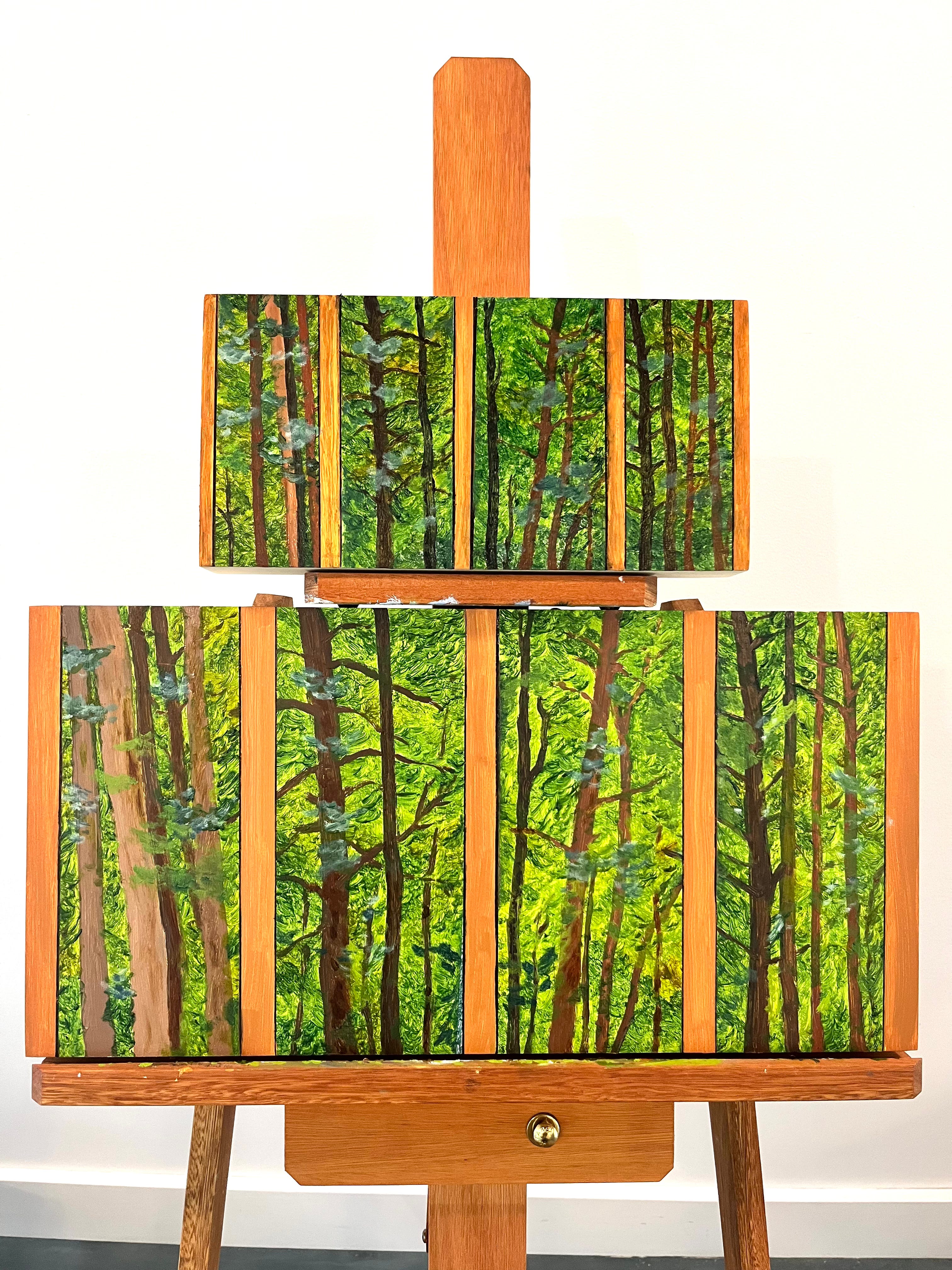
I’m at one of my favorite places right now, trying to get a bit of work done. The paintings above, oil on panel, are of the view outside my studio at Yaddo. I hope to complete work on them in a day or two. I’m trying to be attentive to everything green for a future project. In the meantime, I have just today finished work on the piece for which I had originally started this SubStack. When I was leaving for India I told a close friend that I was going to write daily entries on SubStack during my trip along the Ganga in the hopes that this exercise proved “generative.” After coming to Yaddo, I have used this time to add and give substance to those entries in the hopes of publishing it somewhere good. Fingers firmly crossed. (Do you remember what I had written in one of my earliest entries about Naipaul’s anxiety when he first went to India?) What I don’t want to be forced to turn creative with a rejection letter the way Nikhil Mahapatra, a young playwright I met here at Yaddo, has done creatively at @dejectionletters on Instagram.
For some reason, I have been unable to read here as much as I’d have liked to. There is so much time available to me—I don’t have to cook or take kids to school or other activities—but I have hardly ever read more than a couple of hours each day. Today I read Norman Lewis’s travelogue about India, A Goddess in the Stones. The book had been recommended to me by Pico Iyer a long time ago when we were together at a litfest in Key West. I’m reading the book now, not least because he begins his travels in Bihar. (A welcome change, despite the fact that Lewis gets even some basic facts, like names of places, wrong. Earlier in the month, I read On the Ganges by George Black. An informative book but one chapter began: “A confession: I never set foot in the state of Bihar, which begins just east of Varanasi and sprawls for three hundred miles or so to the border with West Bengal. Few people do. It may be the fear of its reputation for crime and violence; it may be fear of boredom.) Lewis writes that he made a strategic choice to start with Bihar because the worst atrocities took place there: “In Bihar feudalism in its most blatant form remains, nevertheless it is an area of supreme beauty and outstanding historic interest. Little is written about it apart from depressing newspaper reports. It is far away from the well-beaten itineraries of the North offering the justly famous attractions of Agra and the monumental towns of Rajasthan.” I like that. In fact, I will go so far as to say that in my writing about my home-state, in my novels and in my nonfiction, I have tried to convey a sense of place and, more than that, the people who inhabit it. A record of lived experiences. In the forthcoming novel, My Beloved Life, I have told the story of a father and a daughter whose life is shaped by the happenings in Patna.
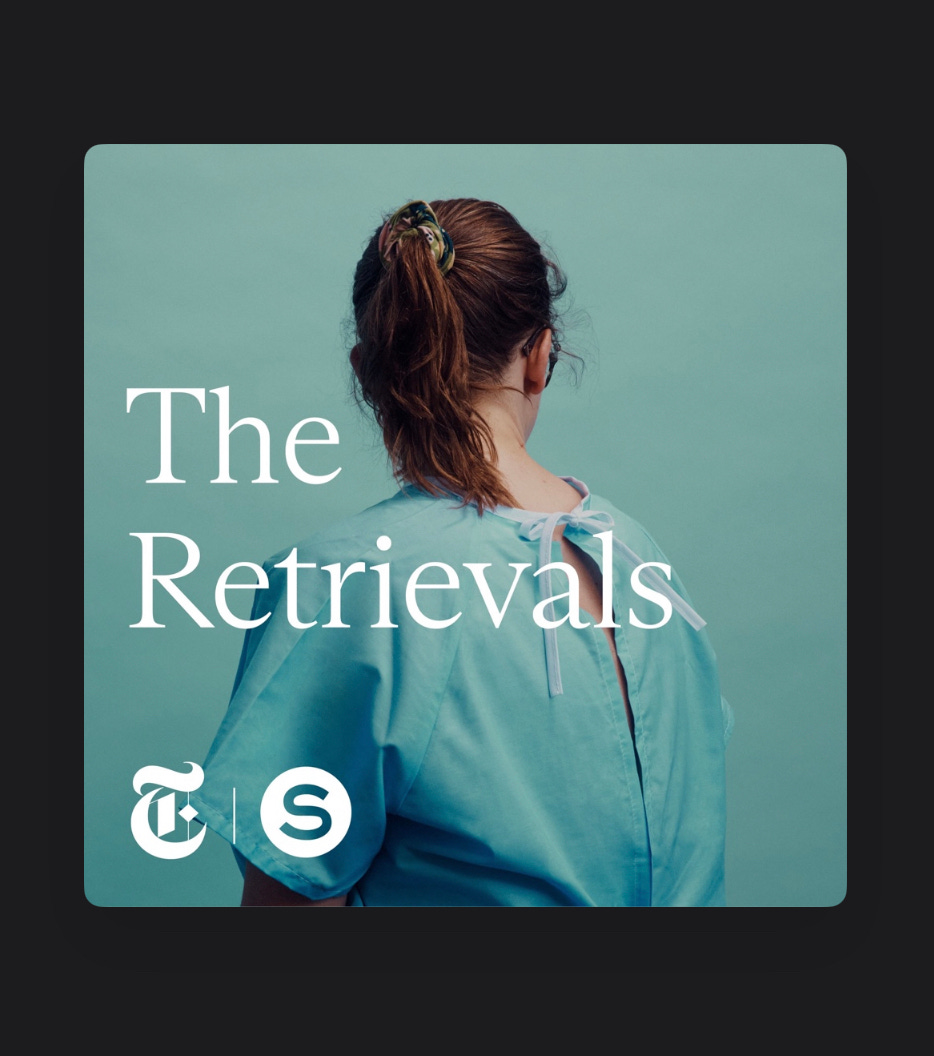
One thing that I have very much enjoyed these last few days in my studio is listening to a podcast called “The Retrievals.” This podcast comes to us from Serial Production and the New York Times. It is the story of women at a fertility clinic in New Haven; these women experience excruciating pain and then they learn why this is happening to them. A story of crime but also about how we tell ourselves stories to deal with life. The best thing about this show is my brilliant friend Leah Mirakhor whose words you hear in each episode; she provides a critical framework to understand what the hell happened to her and the other women at the clinic. And who at the end is resposible for it. My attention flared even in the first episode after I understood how what we were hearing had to do with stories we tell to sometimes to understand, or to compromise, or even to cheat ourselves. As the show’s presenter says early on after Leah has spoken, “The story become a way not only to explain pain but to cope with it. A way not only to make sense of the pain but to manage it, tamp it down, get through it. In this way, the story becomes the medicine that the patients weren’t given.” This show is also a work-in-progress: four episodes have been aired and I eagerly await the final fifth one.
One last thing: if you are interested in how some stories get denied, say, of women’s pain, and how more stories or better stories need to come out about those whose lives and experiences are pushed to the margins, please give a listen to this particular episode of Shadow Yaddo. This features a conversation between my fellow Yaddo resident Danielle Spencer and Yaddo board member and writer Andew Solomon. In a highly illuminating exchange, Danielle explains how “narrative medicine” works both as a critical methodology to strengthen clinical practice with attentiveness to narrative skills among clinicians and, second, as a transdisciplinary field of inquiry which involves close reading as well as interest in illness and disability narratives. I found the conversation fruitful, the two speakers are great interlocutors, and I urge you to give it a listen.
Oh, one last, last thing: if you are interested in applying to Yaddo, the deadline is close. August 1! Hurry!
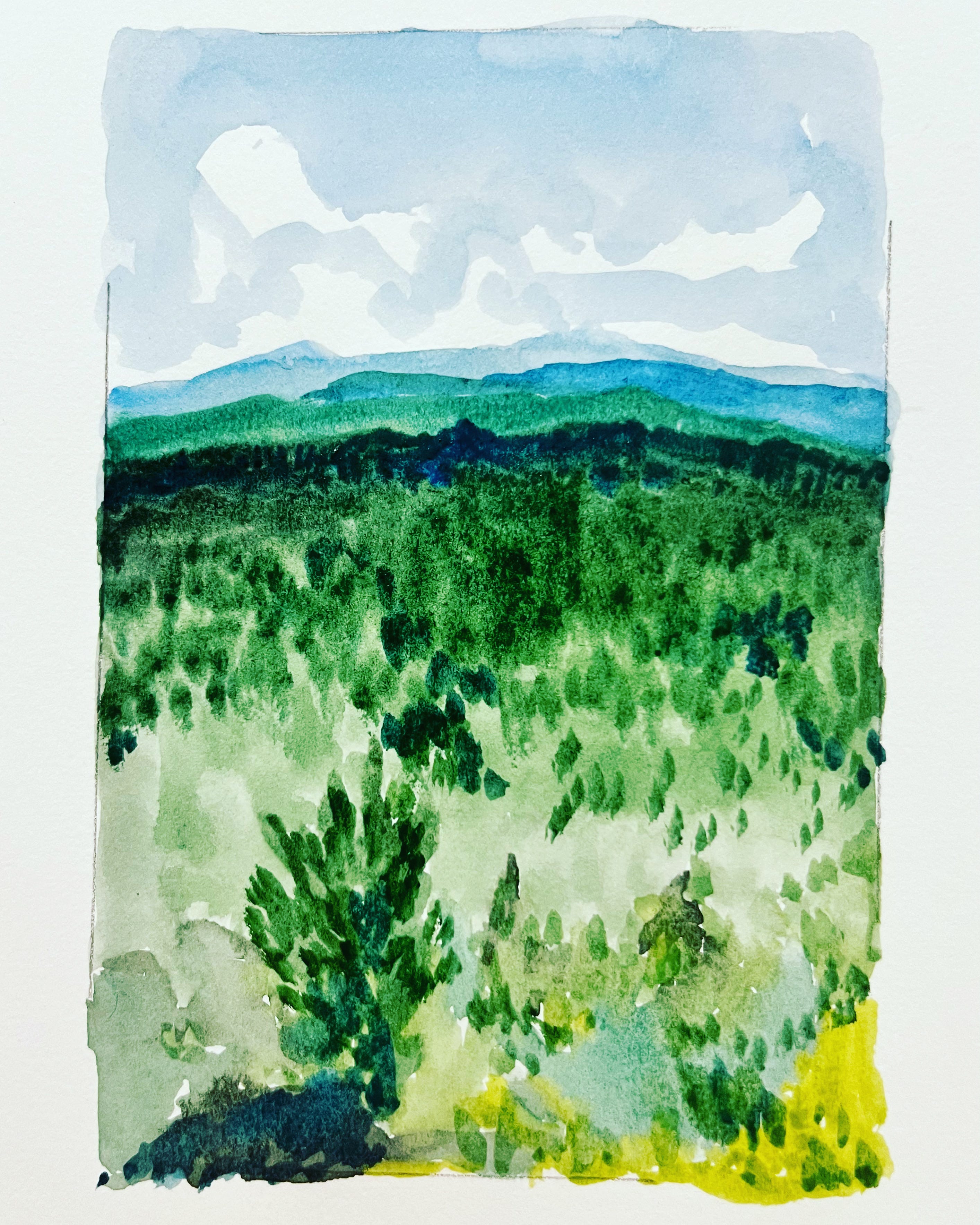
Field trip from Yaddo to the Green Mountains, July 24, 2023