
What Zadie Said
#WhatSheSaid about writers and freedom of speech

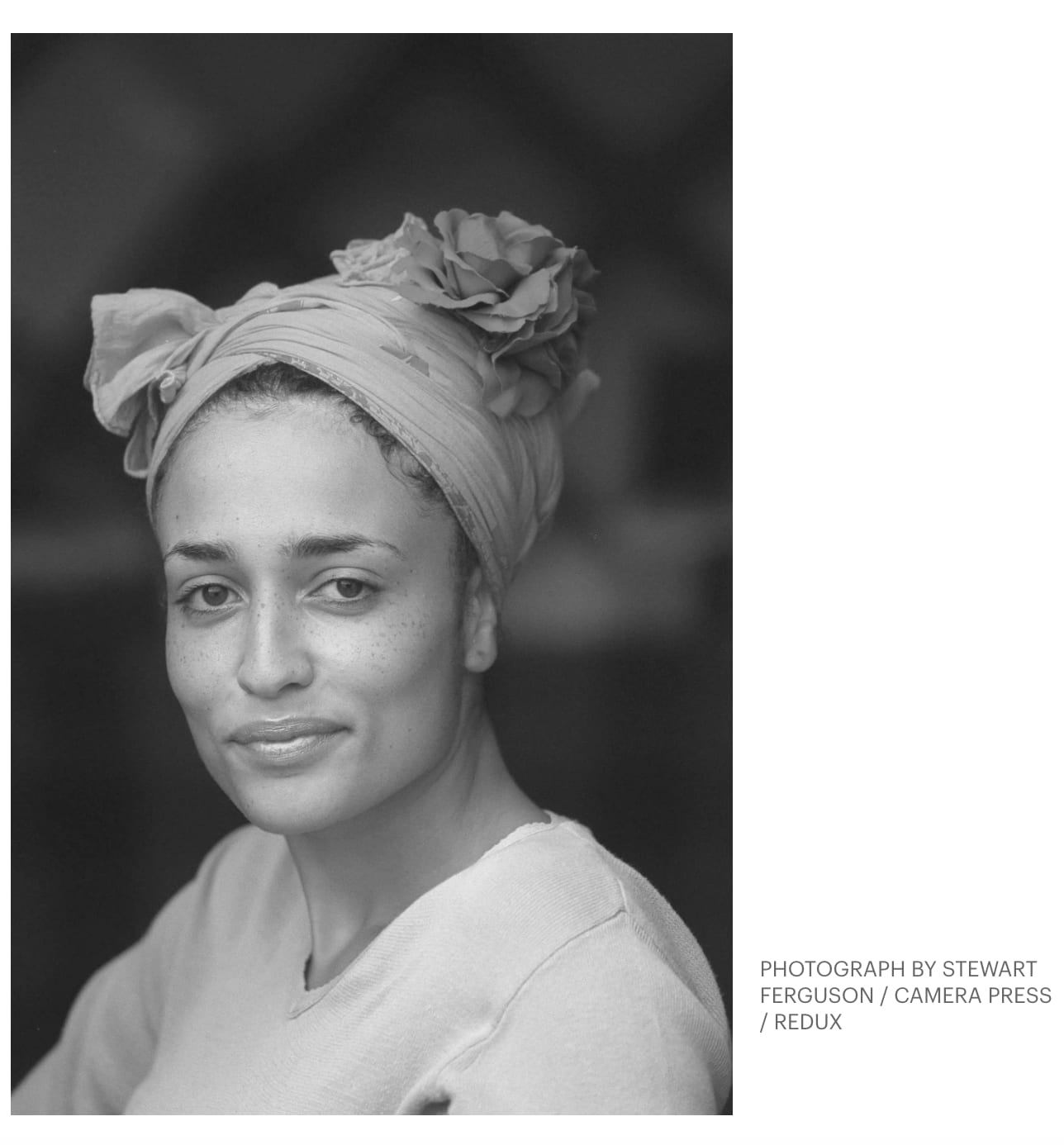
In a couple of days I’ll be headed to the PEN Gala and so I’m thinking of a piece that Zadie Smith wrote about a decade ago. It starts with these words:
“I first heard the name Ahmed Naji at a PEN dinner last spring. I looked up from my dessert to a large projection of a young Egyptian man, rather handsome, slightly louche-looking, with a Burt Reynolds moustache, wearing a Nehru shirt in a dandyish print and the half smile of someone both amusing and easily amused. I learned that he was just thirty and had written a novel called Using Life for which he is currently serving a two-year prison sentence. I thought: good title.”
Zadie goes on to describe that a sixty-five-year-old “concerned citizen,” upon reading an excerpt in a literary weekly, had felt offended and made a complaint to the local judiciary, leading to charges of the crime of “infringing public decency.” Returning from the PEN dinner, Zadie searched the author’s name and found an online interview in which she read the following statements by the writer Naji:
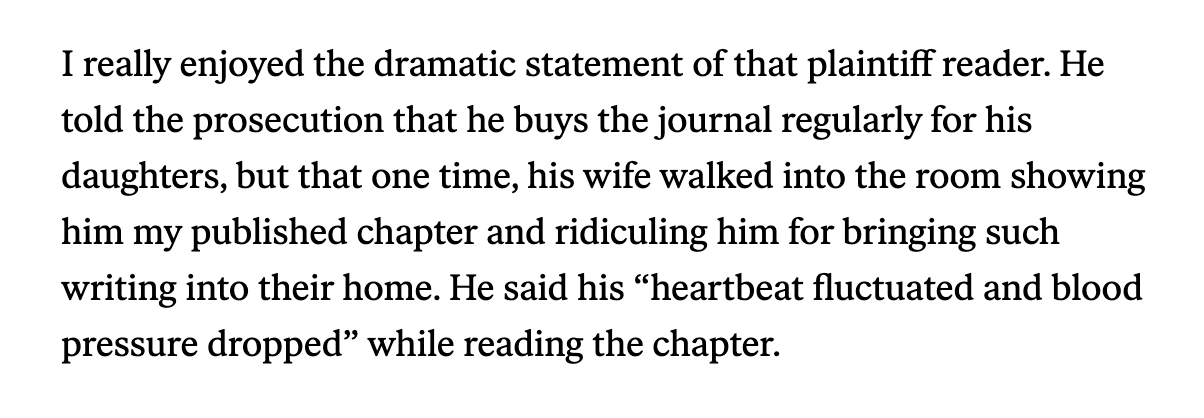
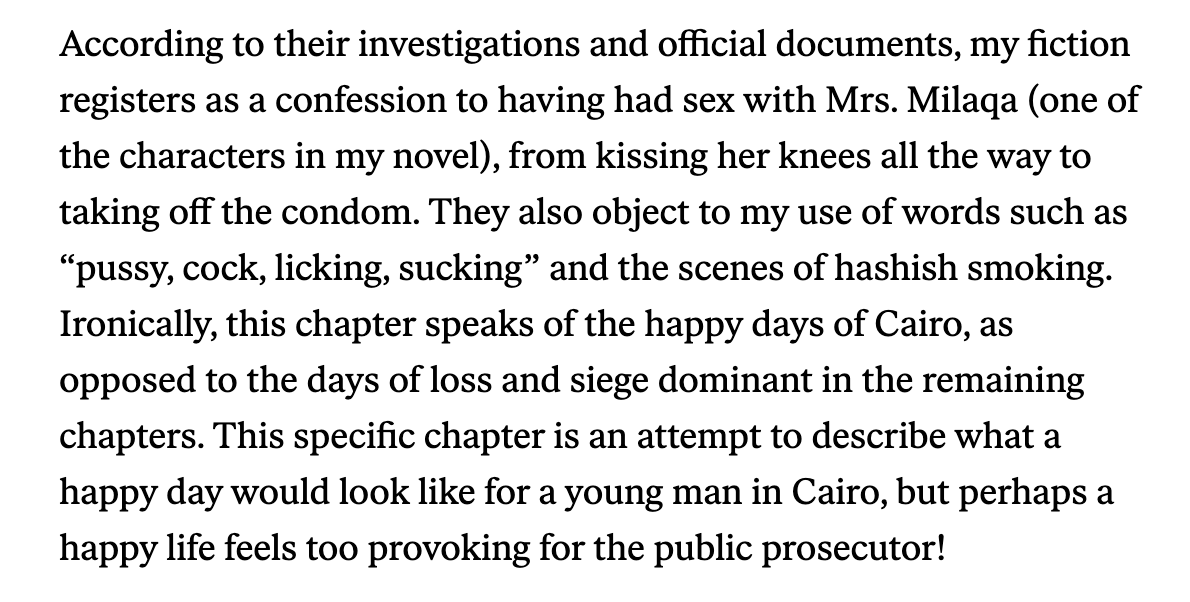
Having read the interview, and because she was now even more intrigued, Zadie acquired a PDF of the novel from a friend. Zadie writes that the book opened with a beautiful line of Lucretius: “Forever is one thing born from another; life is given to none to own, but to all to use.” I haven’t myself read Naji’s book but Zadie has a wonderful description of it: “Using Life is a riotous novel about a failing state, a corrupt city, a hypocritical authority, but it is also about tequila shots and getting laid and smoking weed with your infuriating girlfriend and debating whether rock music died in the Seventies and if Quentin Tarantino is a genius or a fraud. It’s a young man’s book. A young man whose youth is colliding with a dark moment in history.” Here is the author’s fine photo accompanying Zadie’s piece:
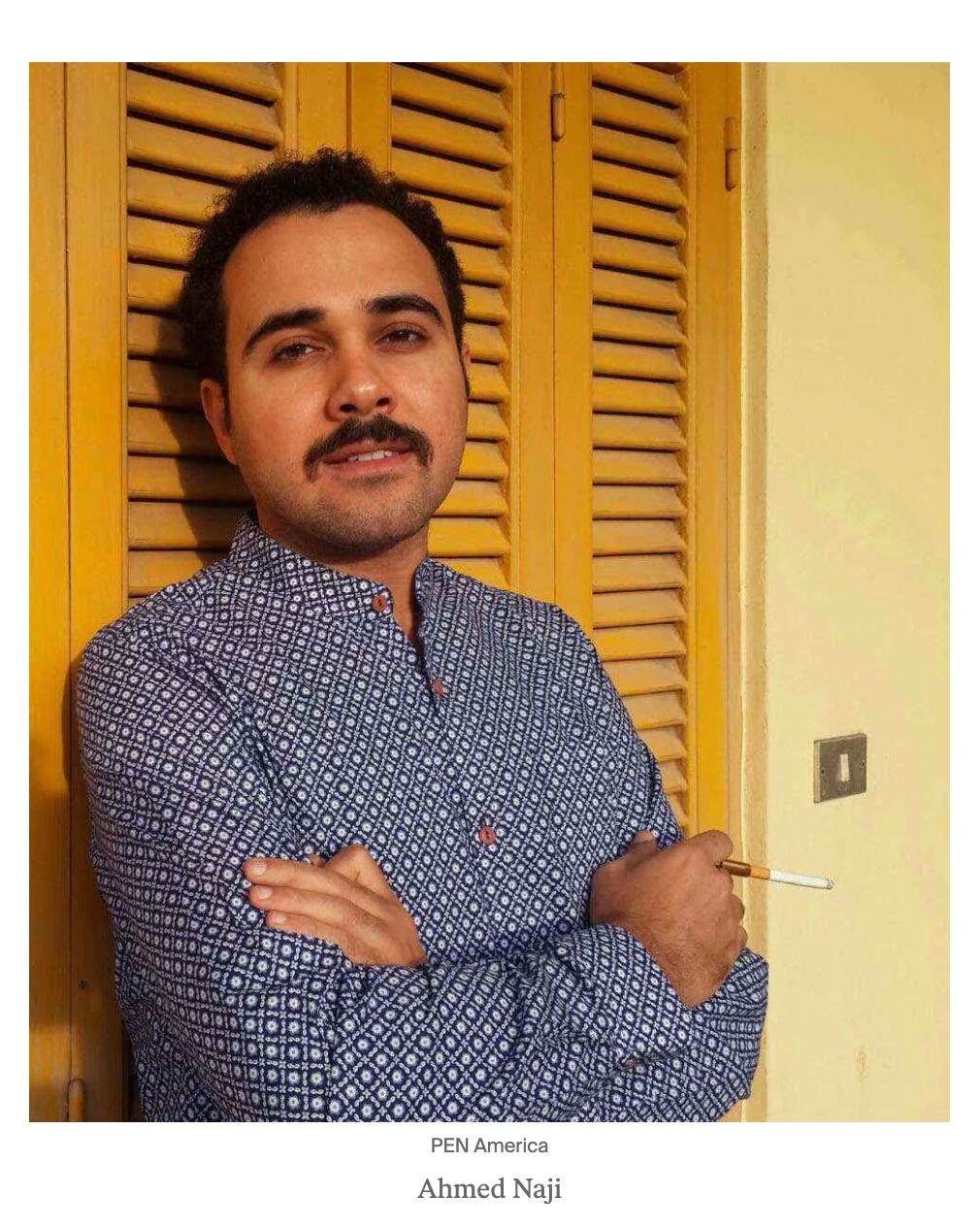
Naji was released from prison and now lives in America. Recently, I was listening on Audible to Zadie’s latest book of essays Dead and Alive, and for this version of the Naji essay Zadie has a new post-script in which she writes about how, under the current Trump administration, words can get you not just detained but also deported. If the Secretary of State finds your words a threat to foreign policy, you are out. Zadie cites in solidarity the case of the Columbia student Mahmoud Khalil and his wise words: “As a Palestinian student I believe that the liberation of the Palestinian people and the Jewish people are intertwined and go hand by hand and you cannot achieve one without the other.” (By the way, you cannot be opposed to sexual or any other violence by Hamas and go on defending rape and destruction by the Israeli army, the subject of the Nick Kristof piece in the Times yesterday. I was very moved by this CNN report about the Palestinian journalist Ali al-Samoudi after his release from Israeli prison.)
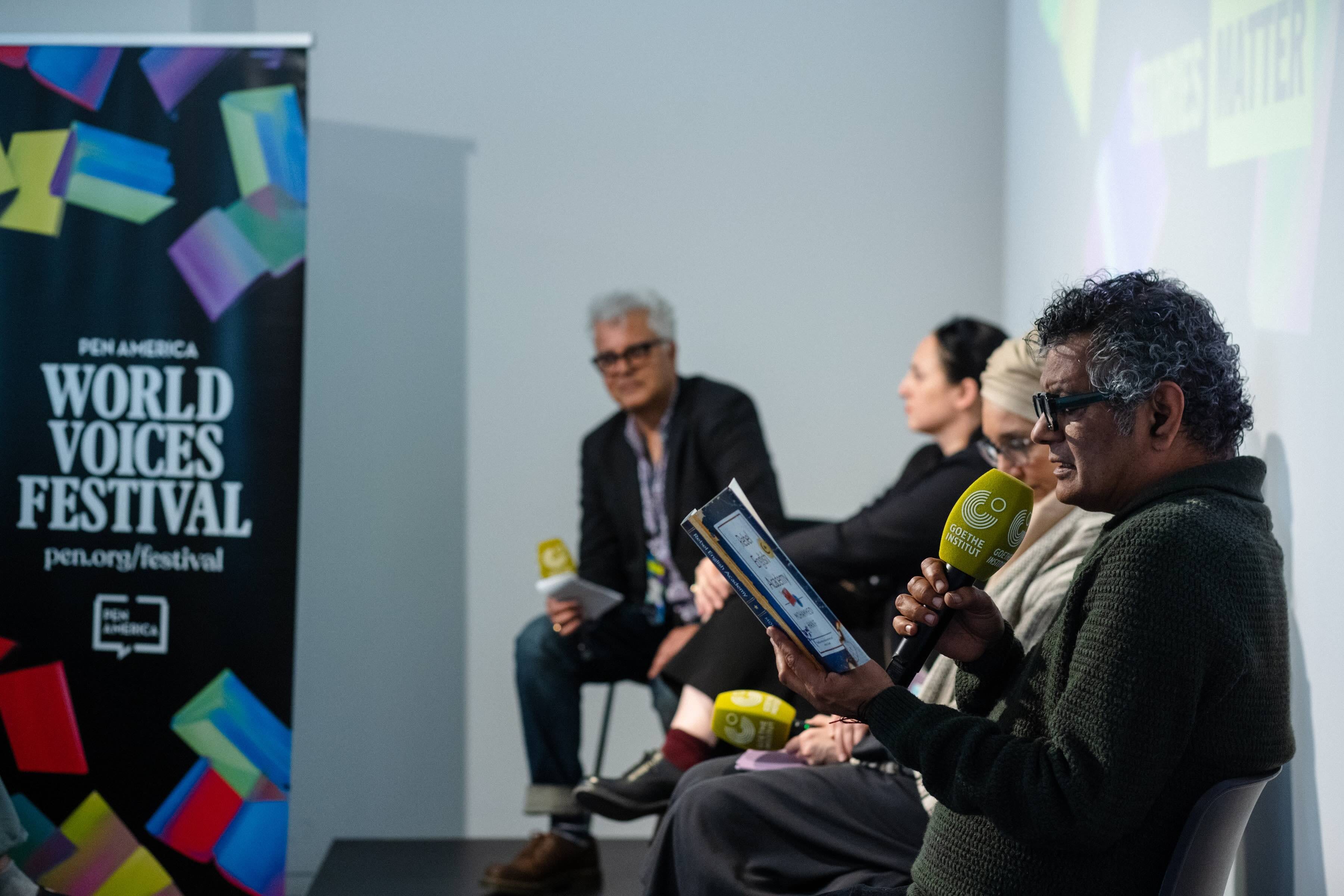
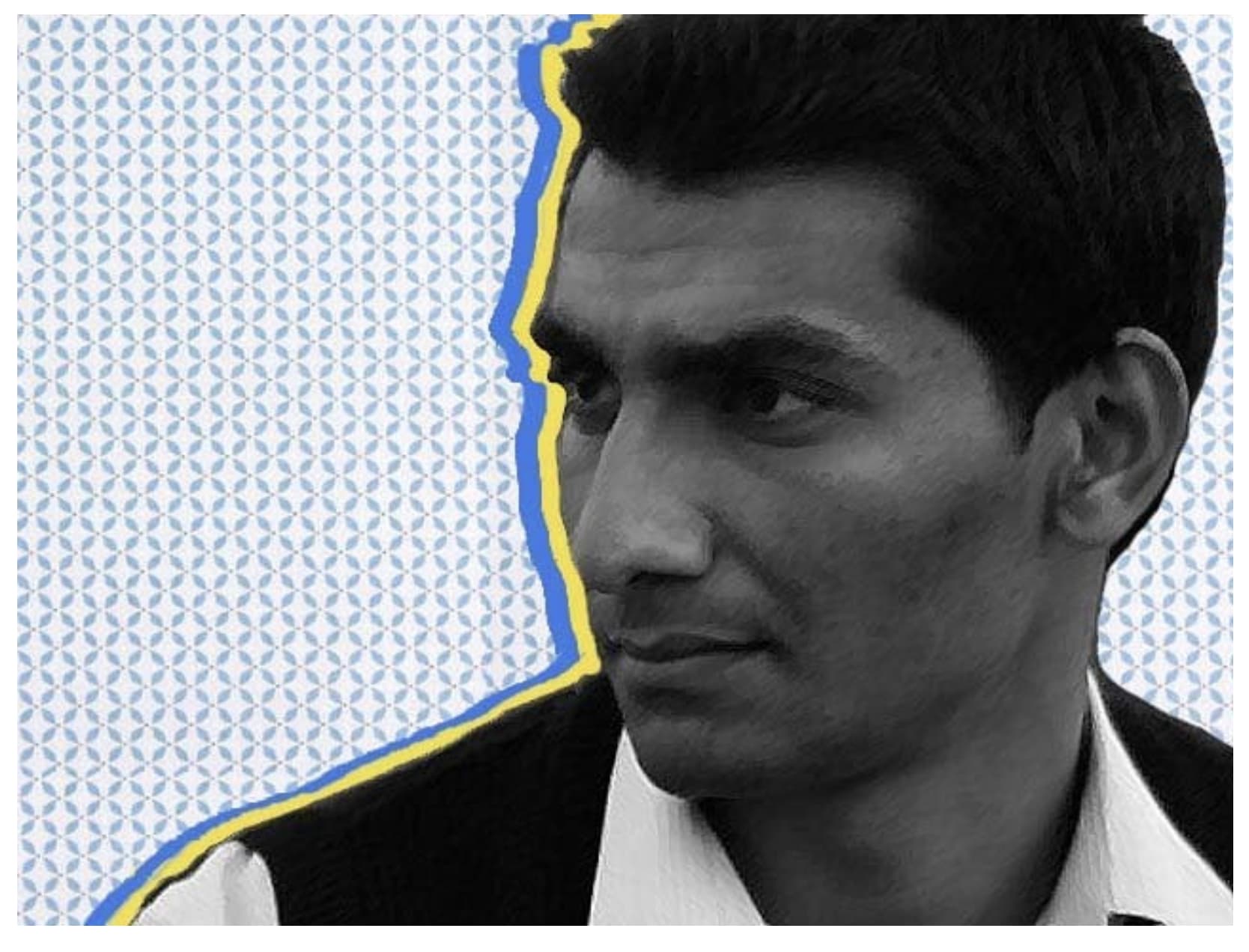
I want to use Zadie’s words about Naji as a model to make a case for another writer. I could name many from my own country of birth, India, but let me bring to your attention a case from across the border in Pakistan. Recently, at the PEN World Voices, the writer Mohammed Hanif spoke on our panel about a jailed academic and writer, Junaid Hafeez. Hafeez has been imprisoned on the charge of blasphemy; he is a man who gave up the study of medicine to pursue literature and poetry. I have written to the good folks at PEN America about Hanif’s appeal and I hope we can achieve for Hafeez what was done a decade ago for Ahmed Naji. Here is a photograph of Junaid Hafeez:
As I dust off my jacket and look for my black tie to wear at the PEN dinner, I will take delight in a little riff that Zadie offered in her piece about Naji, a kind of magical thinking: “In another historical moment, or so it occurs to me, young Ahmed would be at that PEN dinner, sitting right next to me, having come over from Cairo for a quick jaunt to see writer friends in Bed-Stuy, and he’d be a bit bored by the solemn speeches, sneaking out the back of the museum to smoke a joint perhaps, and then returning to his seat in high humor just in time to watch a literary giant whom he didn’t really respect come up to the stage to receive an award. That, anyway, is the spirit I detect in his novel: perverse and brilliant, full of youth, energy, light!”
Post-script: Talking of delight, here is my little bit of documentary work, when Zadie was singing at the Barbican while accompanied by the BBC Symphony Orchestra! Please check it out! #WhatSheSang
I love hearing Amitava Kumar's voice on page! Like Smith's in the quoted paragraph at the beginning of this newsletter, Kumar's voice is so full of warmth, wit, and good humor.
thank you for this, Amitava, and for that amazing recording of Zadie at the Barbican- my God- she is magnetic.