
What Will You Do For A Year
In which I go to Dia Beacon, look at art—and damn—wake up this morning to find out that the great David Hockney has died

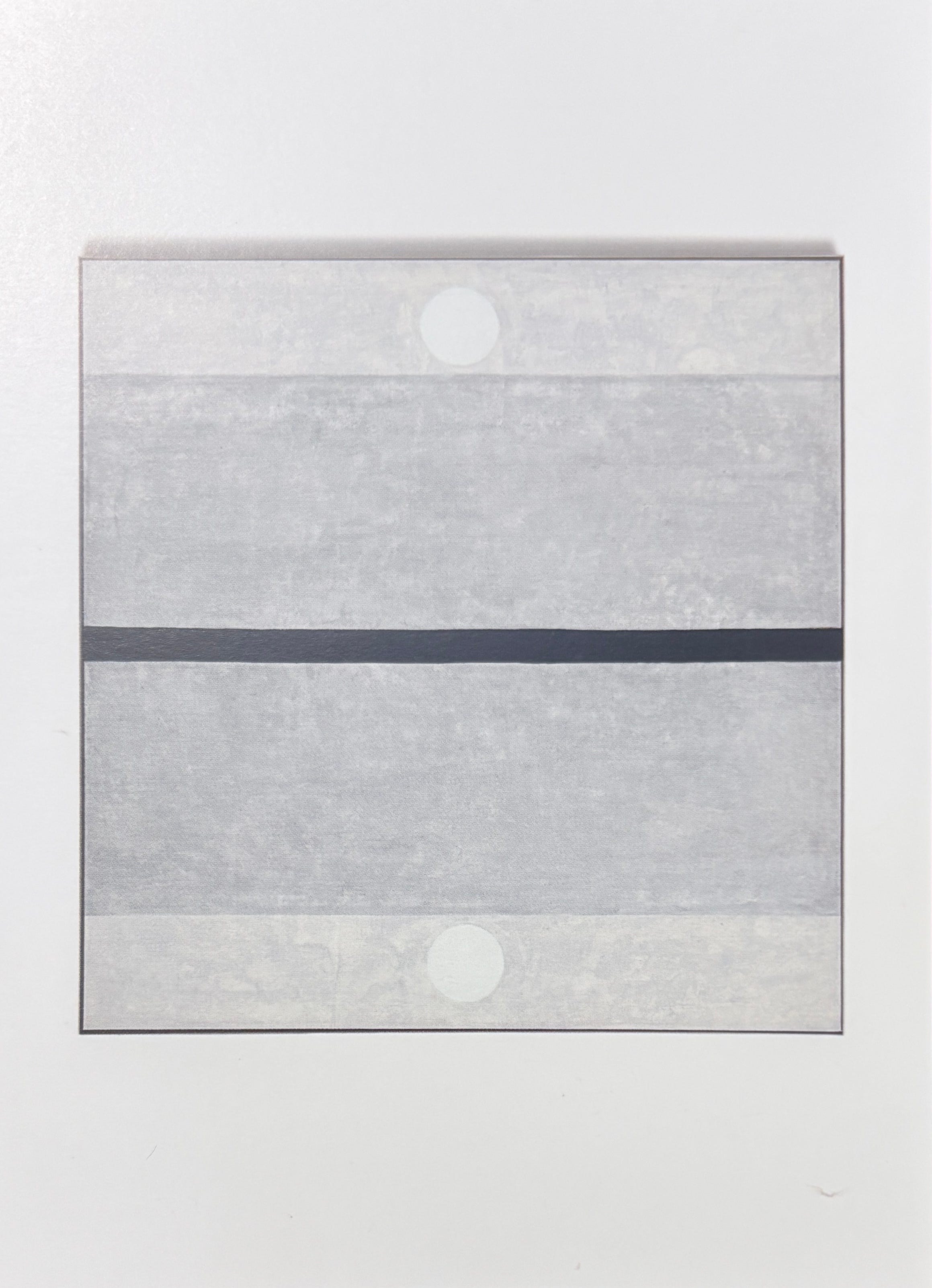
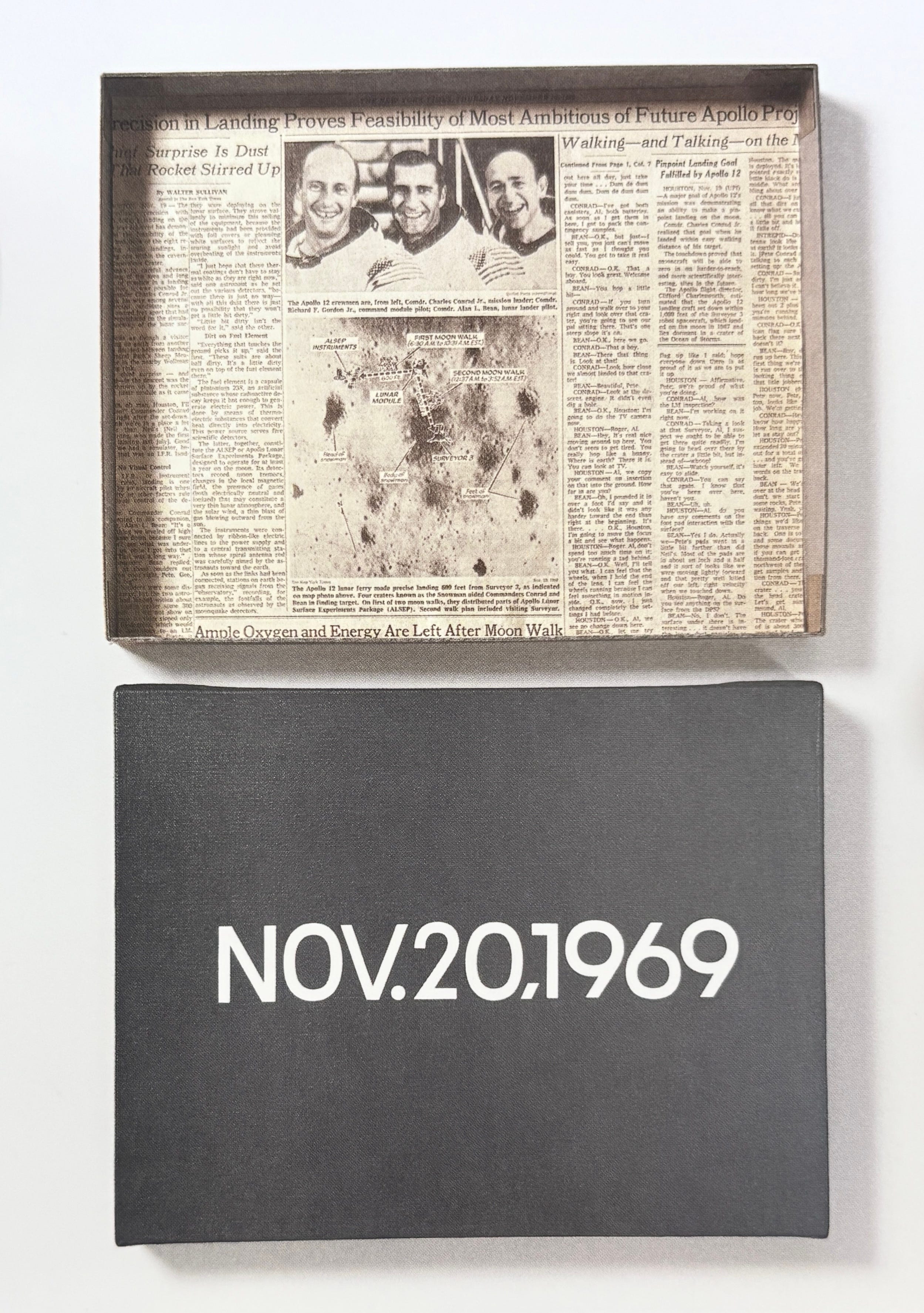
My son needed to be taken to some graduation party in Beacon. The whole afternoon was lost now: I’d have preferred to nap. Then I cheered up because it struck me that I could drop him at the party and spend all that time at Dia Beacon. At first I went to the room where the works of Agnes Martin (above) were displayed. Such stillness! If my days were a stretch of undifferentiated days, as they often are, I’d want to make marks that would divide one day from another, a rigorous, regular grid that gave order to the chaos. The next room I visited and spent time in was the one with On Kawara’s panels—only dates on dark panels, repeated one after another. Random dates, or so it appeared, but I understand that the artist didn’t paint daily; he only painted on days that he wanted to memorialize in a particular way. On Kawara marked that day by pasting on the obverse a cutting from the day’s newspaper—as I discovered at the museum’s shop, there was a postcard showing this practice:
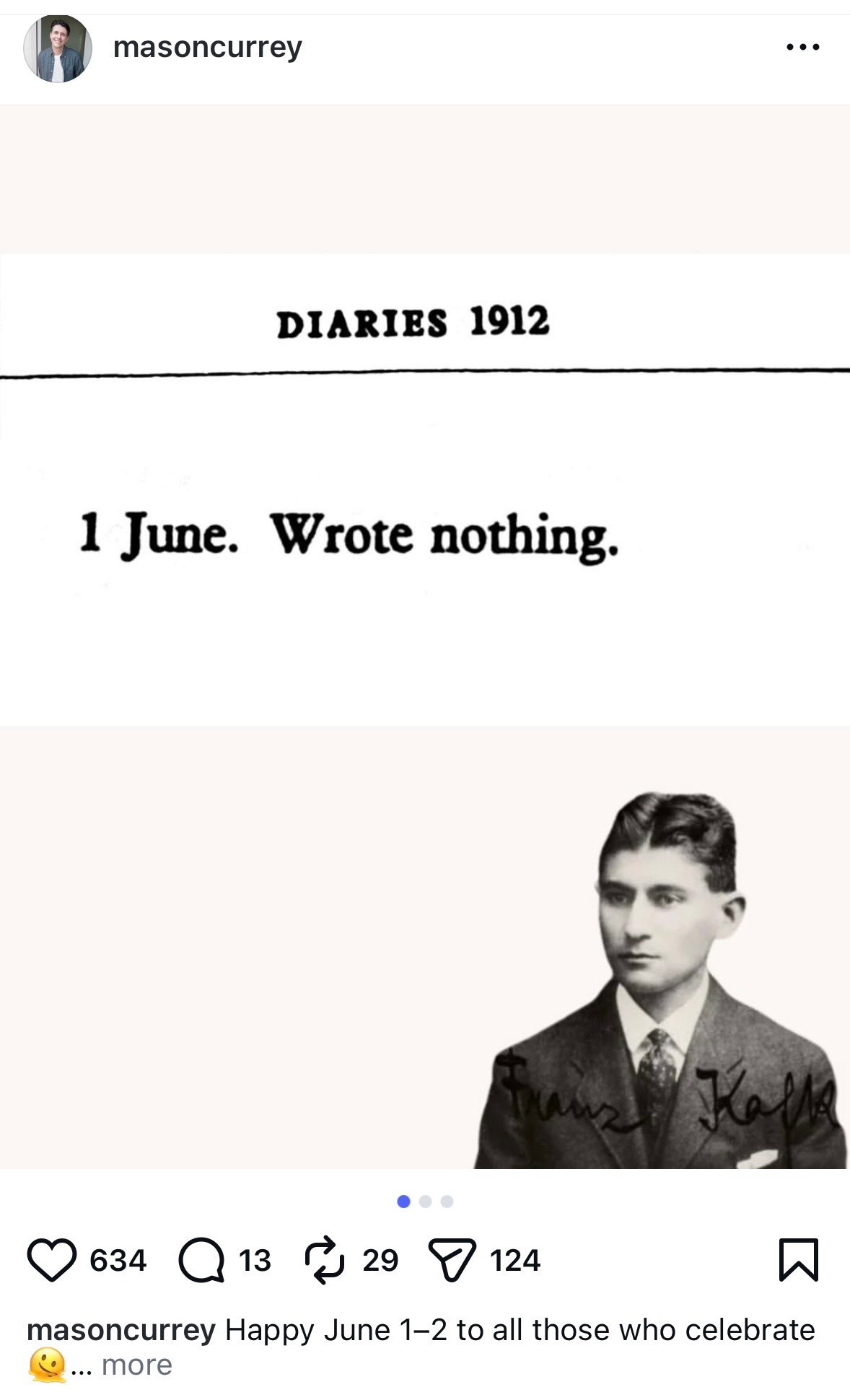
I think of my journal-writing and also of my writing as a way of introducing pause in the passing of days. How to do this in a way that is particular or specific to one’s manner of existing in the world? Here, in a way that is close to my heart, is Kafka’s journal (I got this from Mason Currey’s post on Instagram—you might want to follow Mason on SubStack if you want to know more about writers and rituals):
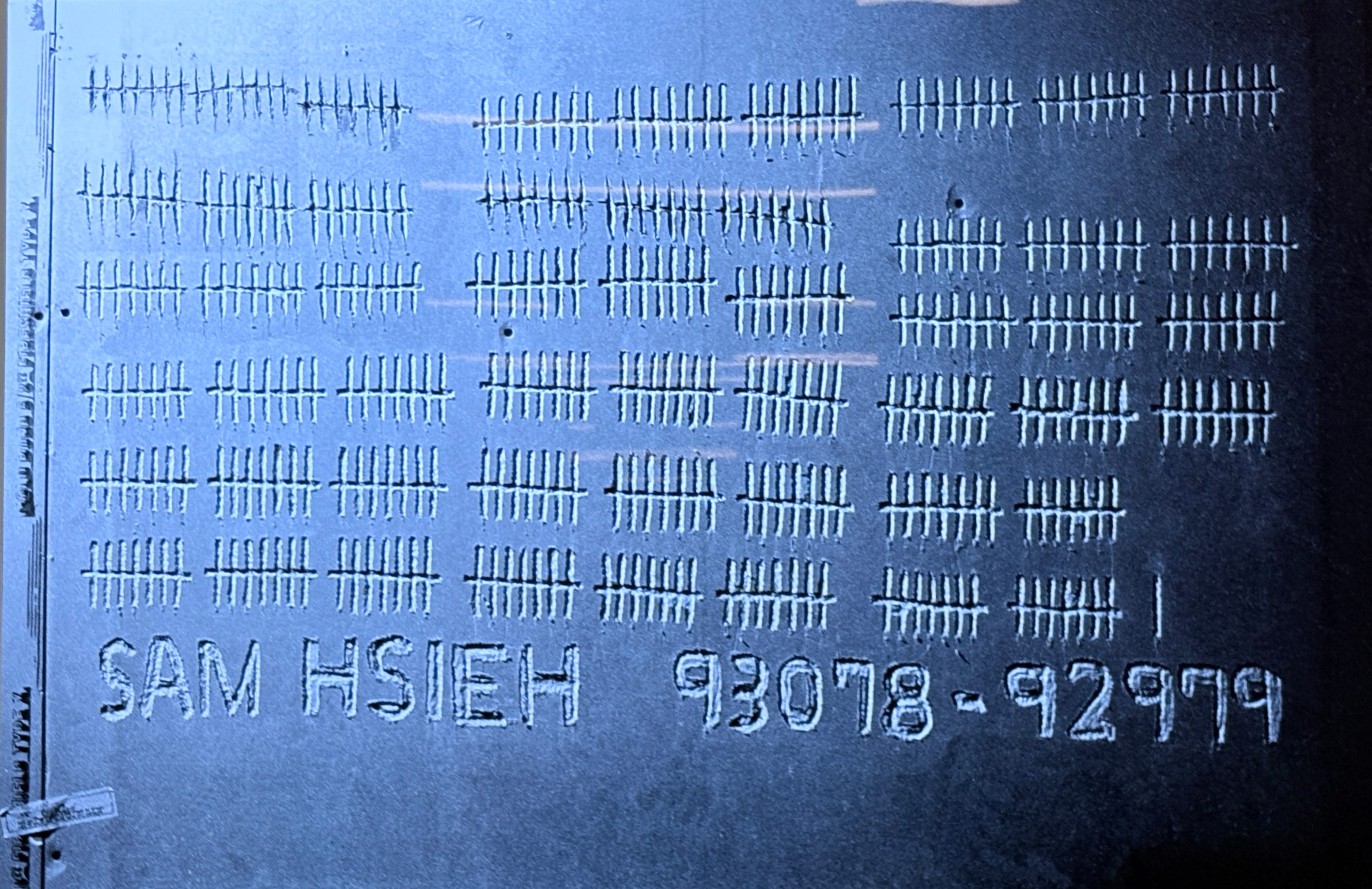
Then, on a lower level in Dia Beacon, I came across the exhibition of the works of the performance artist Tehching Hseih. His projects often spanned a year. Here is how a report in the New York Times about this exhibition begins: “This is home,” the artist Tehching Hsieh proclaimed proudly. He was sitting on the edge of a discolored mattress inside a 9-by-11.5-foot cage. He occupied this tiny space from Sept. 30, 1978, to Sept. 30, 1979, as part of a performance artwork that has become the stuff of legend. He did not talk, read, write, listen to the radio or leave the enclosure for one year.
These were the marks that Hseih made on the wall of his cage during the year of his artistic project (I recognized this image because I had seen a print of this displayed for years in the home of my dear friends Carol Wang and Hua Hsu):
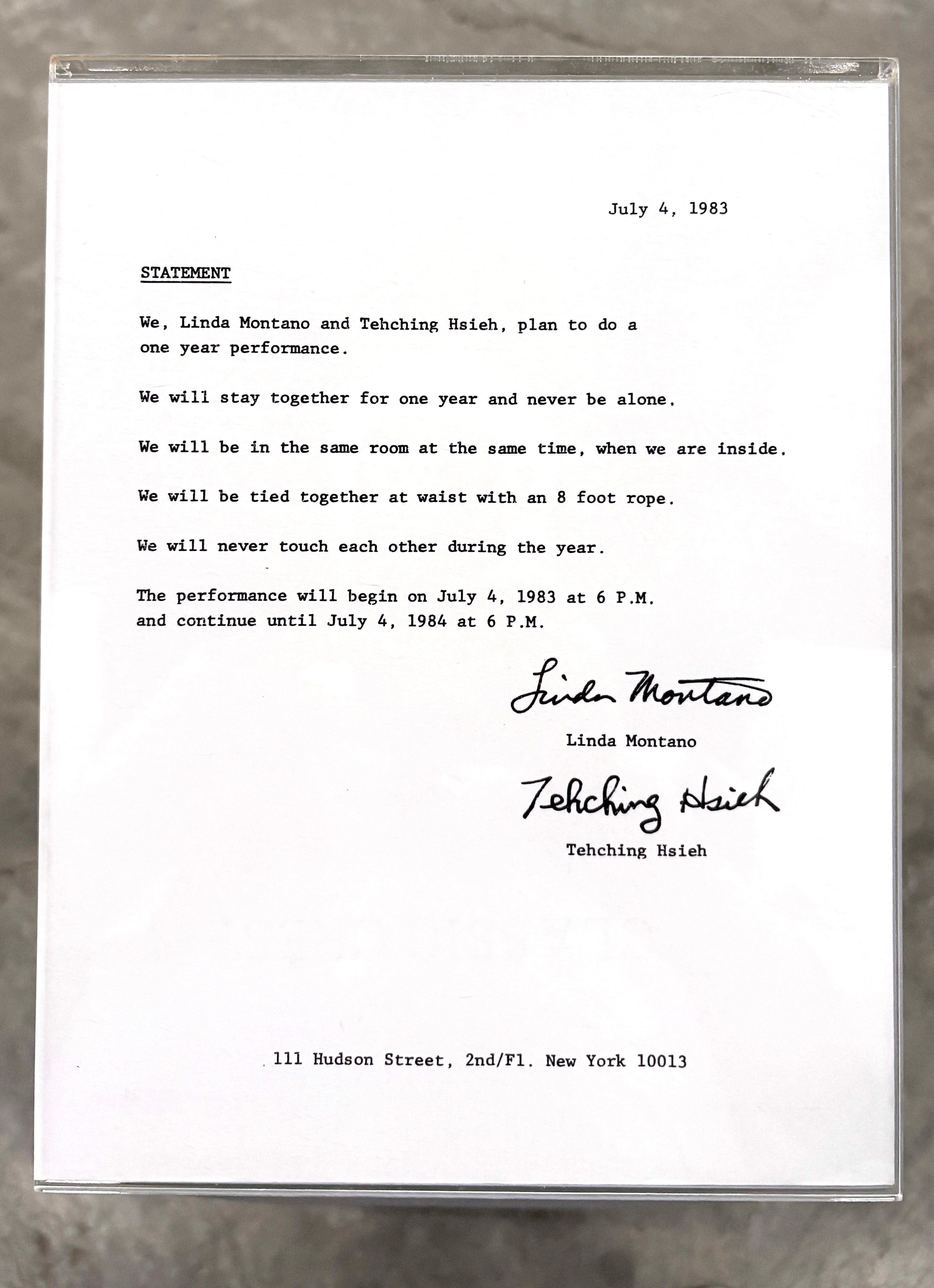
The conditions that Hsieh set for his year-long performances (for instance, to remain tied by an eight-foot rope to an artist named Linda Montano whom he didn’t know very well) were also ways to imagine freedom within the most difficult restrictions. Such precarity, such strength! Here are the rules for the life-experiment that Hsieh and Montano collaborated on:
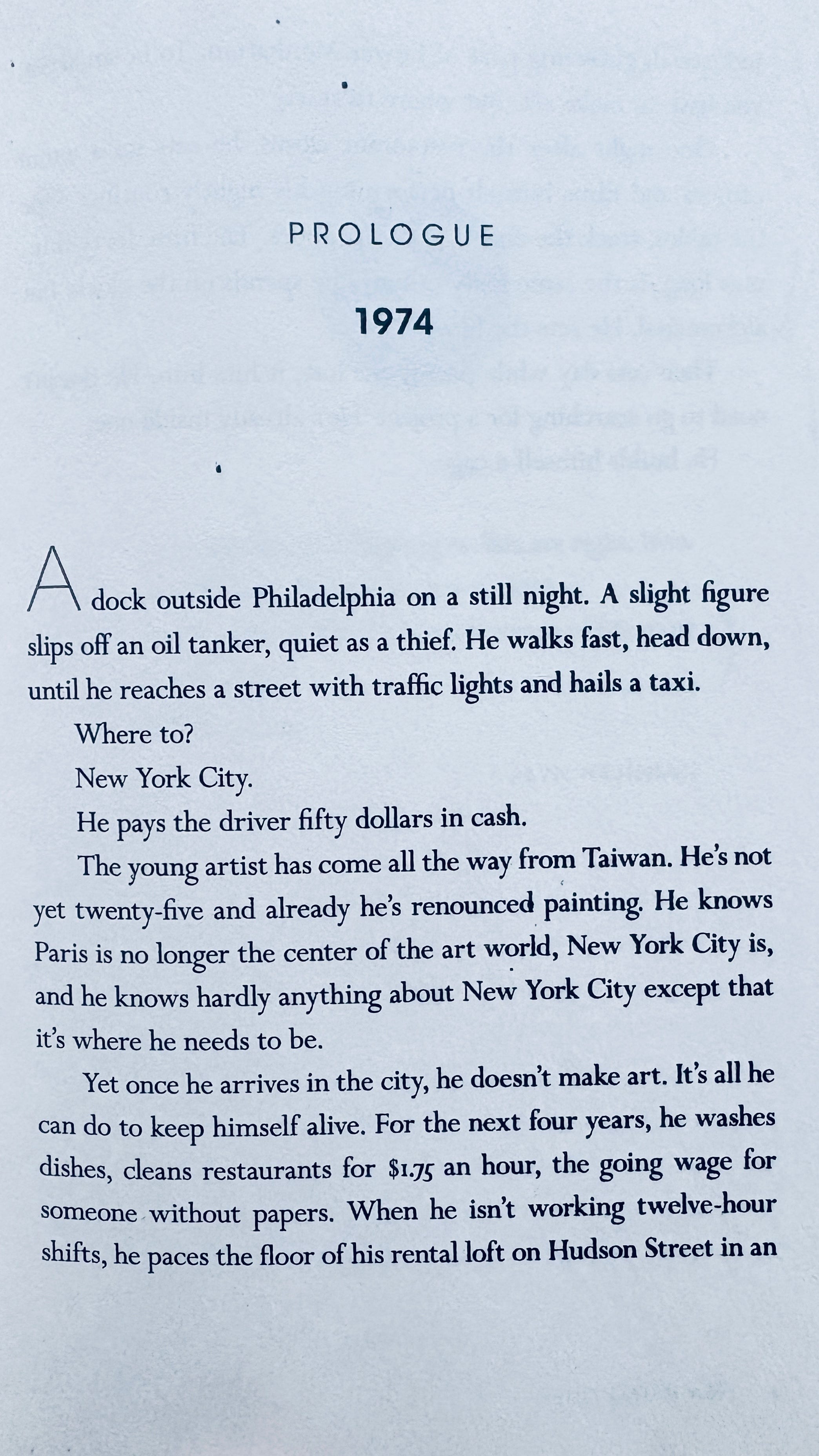
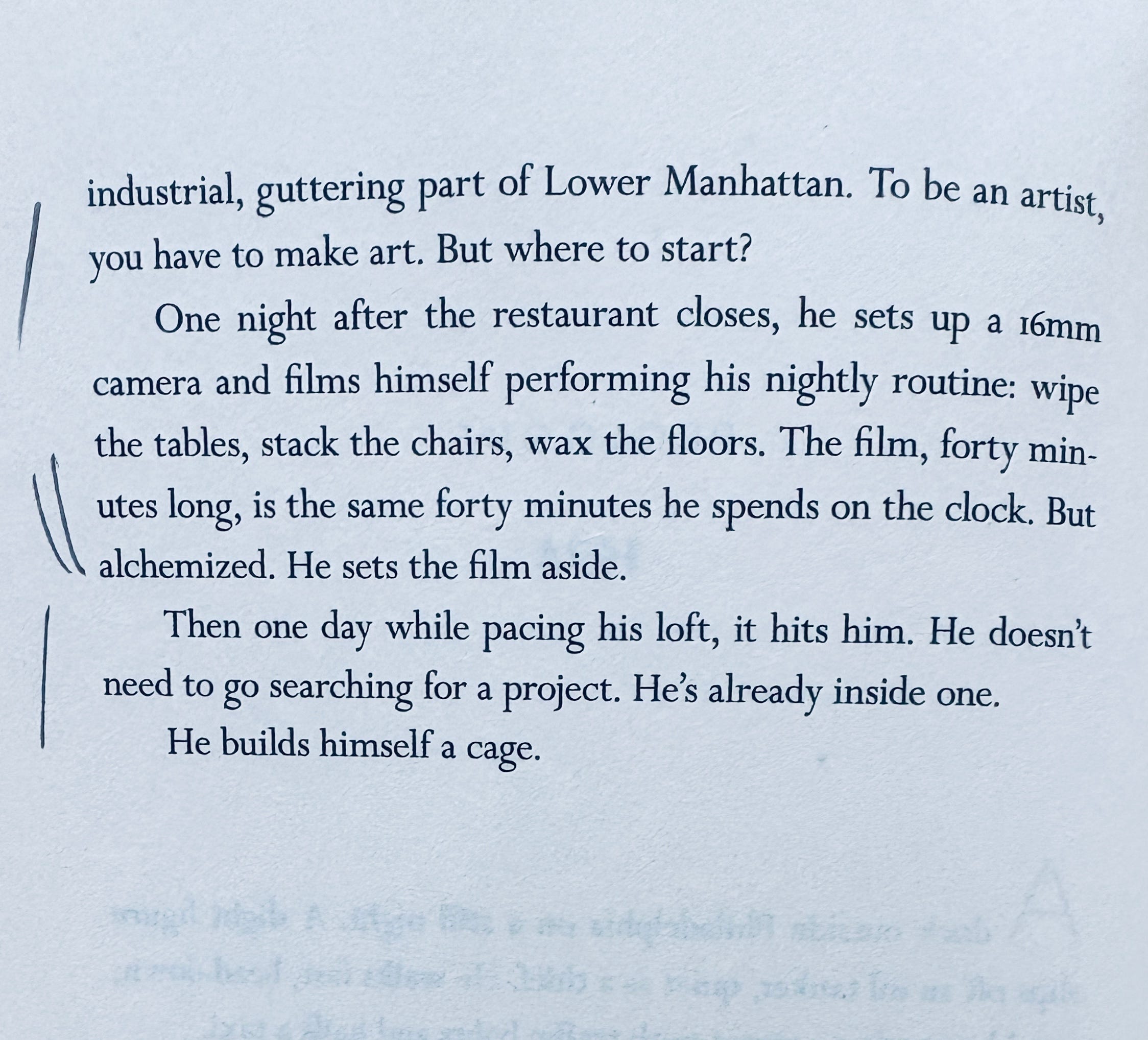
When I was at the museum I thought also of Lisa Hsiao Chen’s novel, Activities of Daily Living. The novel’s protagonist, Alice, is preoccupied with the works of an artist who is Tehching Hsieh . . . and her own life-project for the year is taking care of her father who is slipping into dementia. Chen’s novel is a brilliant meditation on life and art; it demonstrates how the everyday is not just the domain of art but also the site of artistic and intellectual struggle and maybe even triumph. Here is the novel’s prologue:
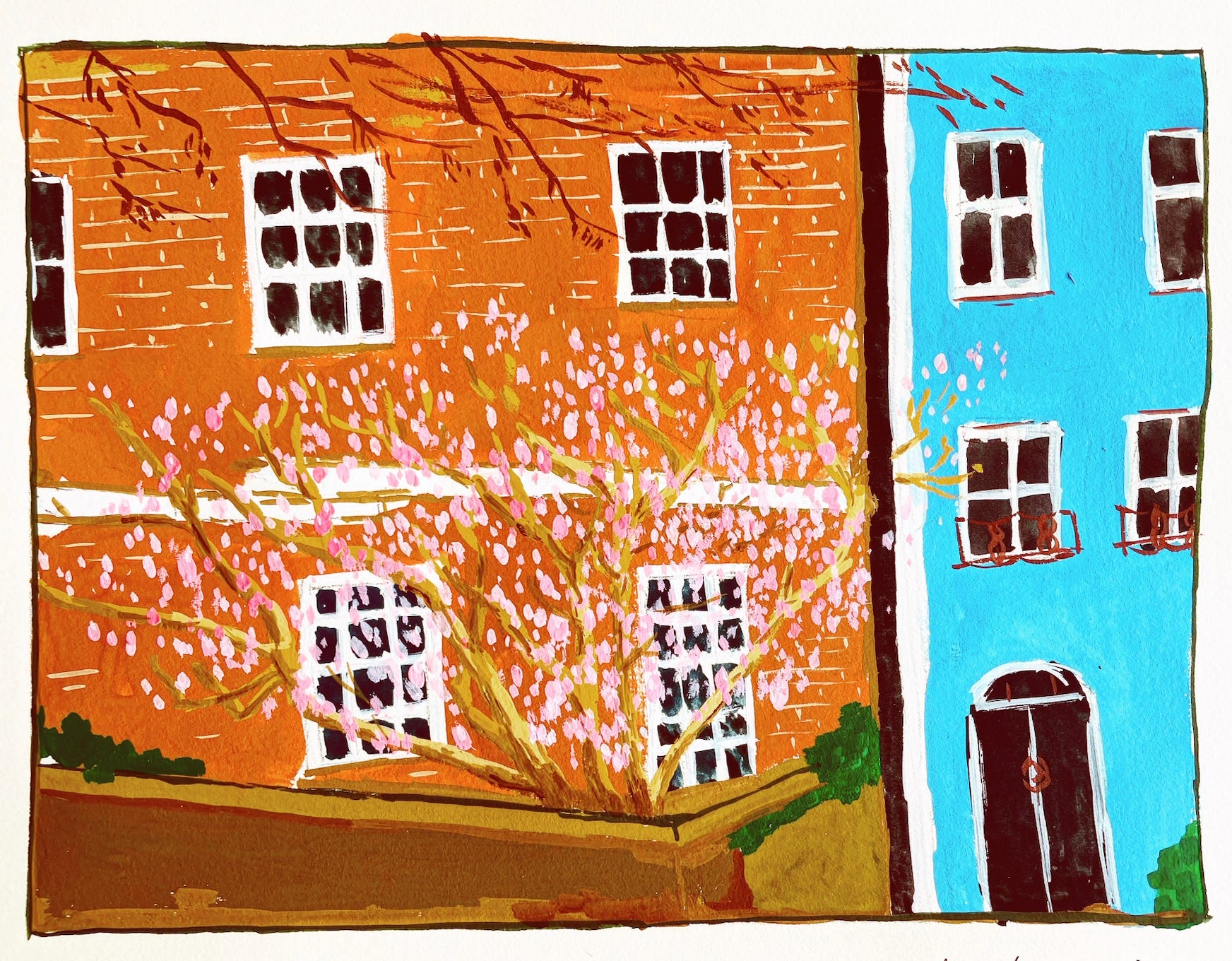
P.S. Found out this morning that David Hockney has died. How beautiful was his life! He painted so well and so joyfully. A few years ago, when I was teaching in London, I kept a journal and painted everyday. (This work became the second volume in my series and was titled The Yellow Book.) During all that time, I never failed to think about, and get inspired by, the example of Hockney. Bless the artists who gift us freedom! I remember painting this in Hampstead on my birthday that year:
Lisa Chen’s novel has such clean prose. For example, “Someone in charge of the Father's hygiene and grooming must have shaved it off. His face had turned into a hotel room, furnished with only the most basic items to facilitate cleaning and maintenance.”
I, too, was sad about Hockney. His colors! I discovered him through the swimming pools, love the blue terrace paintings, especially one where a gigantic leaf encroaches under the roof. I just found out he painted portraits. (I'll put Dia Beacon on my list...)