
Talking to the Deer
Shout-out to the poet Mikko Harvey

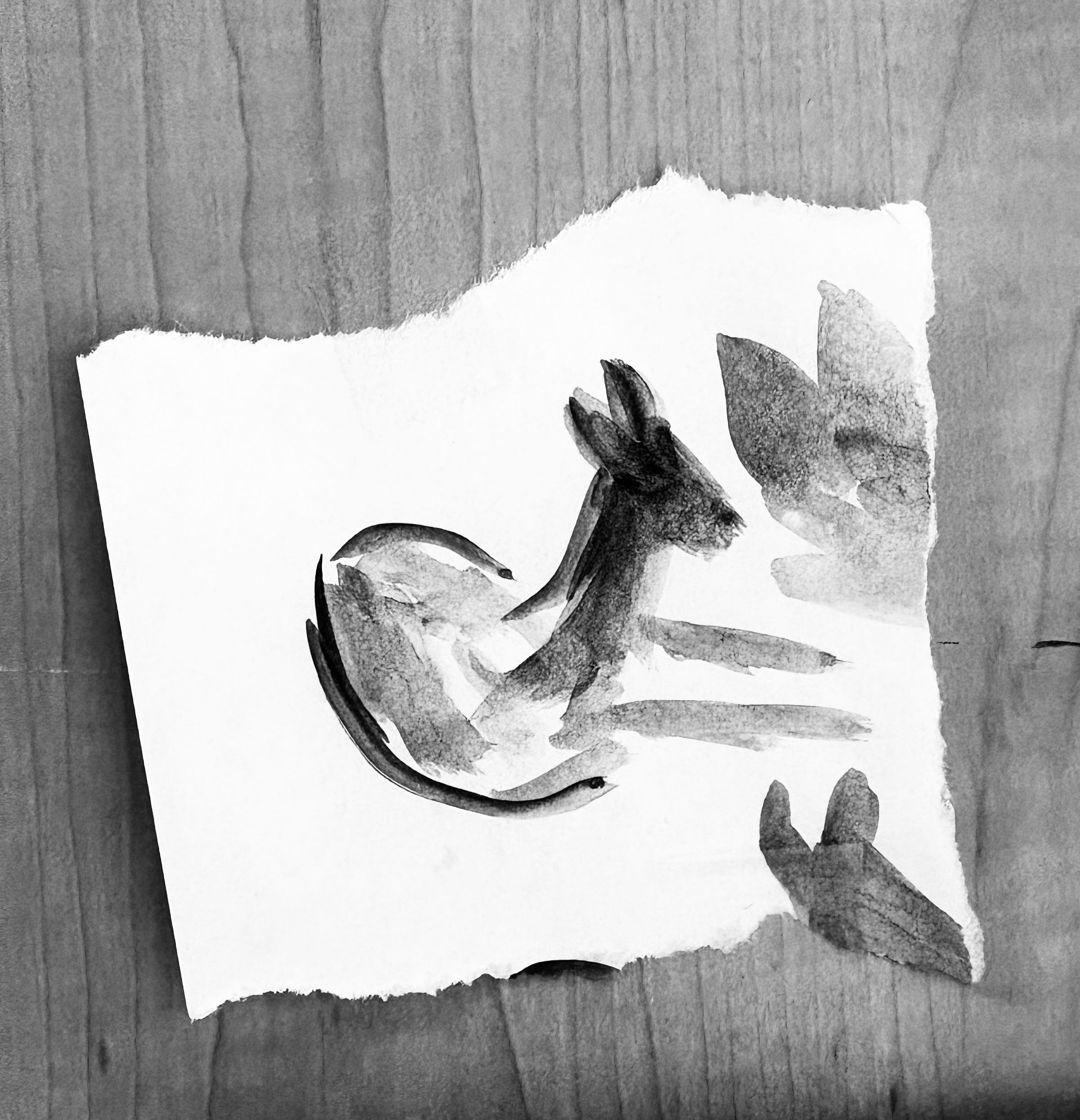
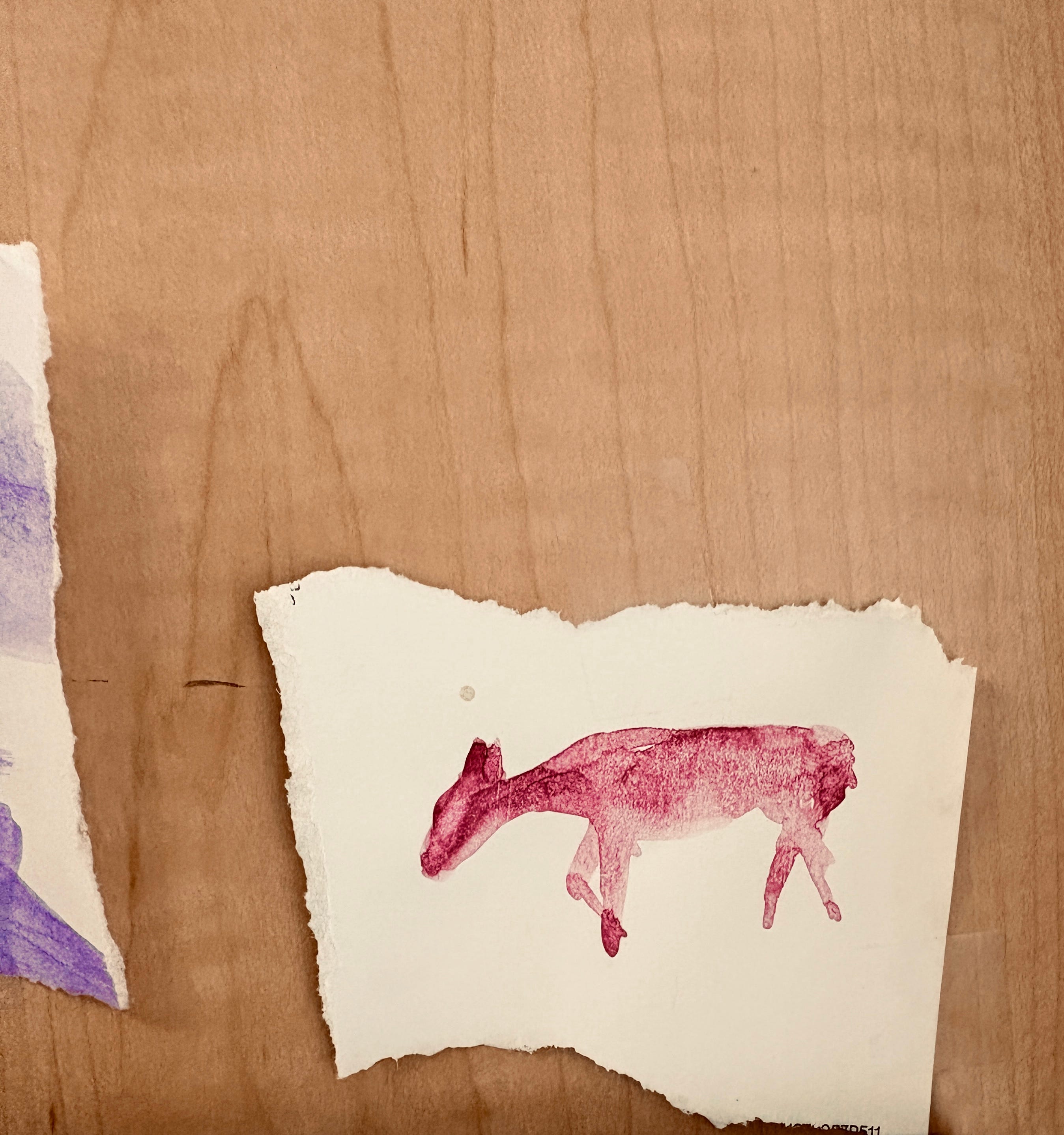
There are always deer in my backyard and I try to draw them. In recent days when making those drawings, I have often thought of a poem I read recently by Mikko Harvey.
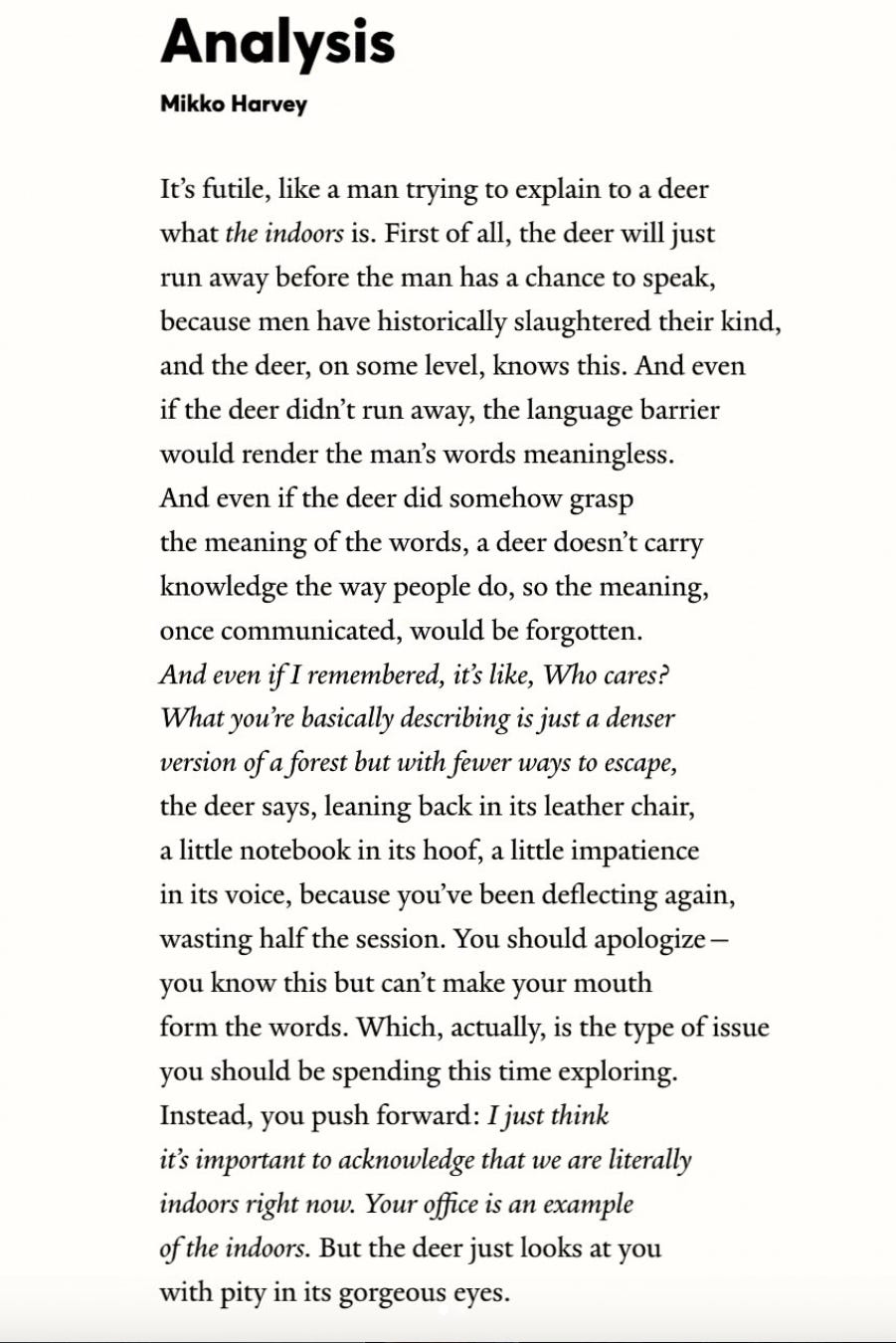
I love the turn midway through the poem, the deer is no longer the dumb animal but the suave and sophisticated analyst. There are other layers. The man or the “you” can’t make his mouth form the words—and that is the type of issue he should spend his time exploring. A profound, mischievous clue that the poet has dropped in the middle of the beautiful mystery that is this poem.
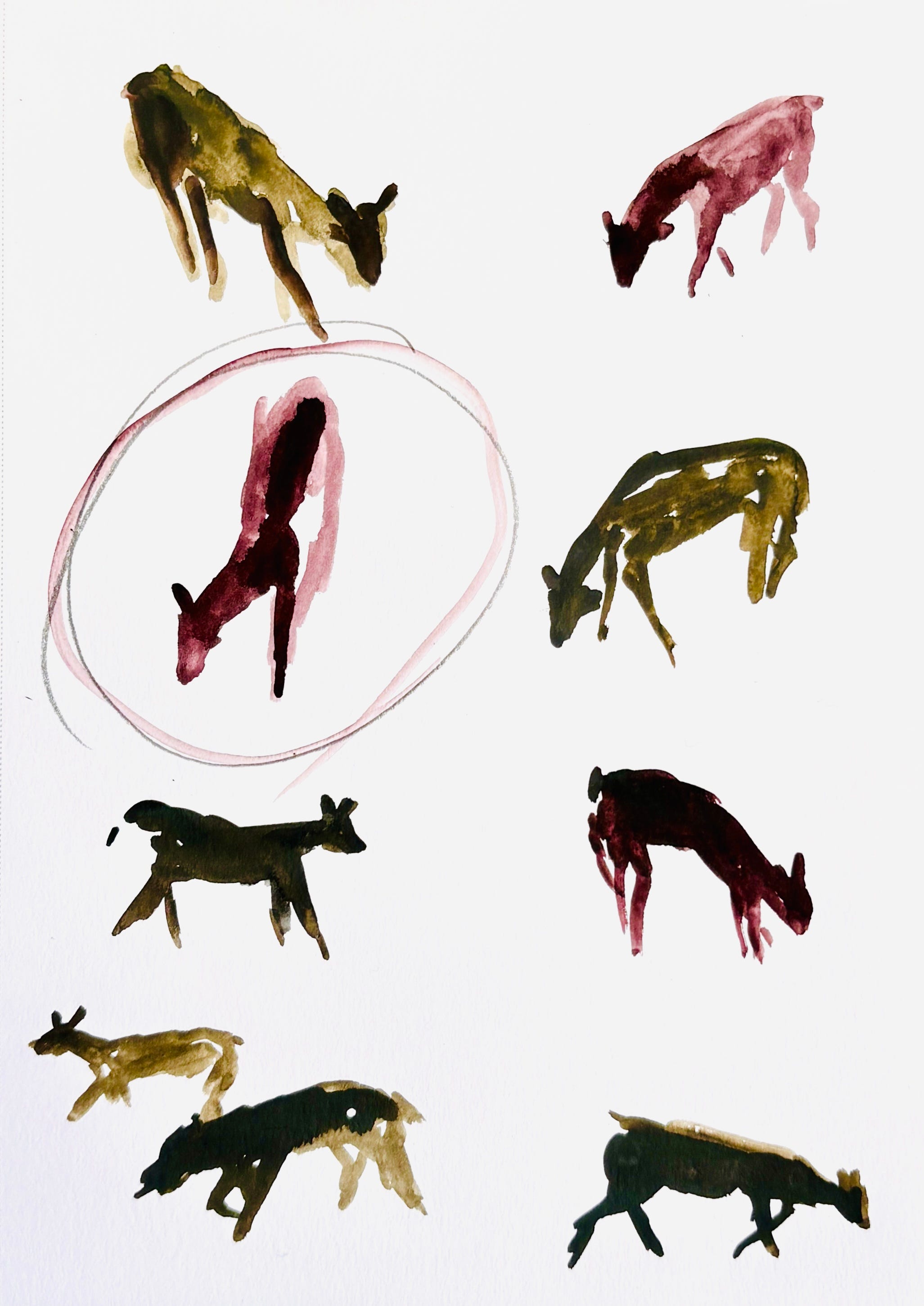
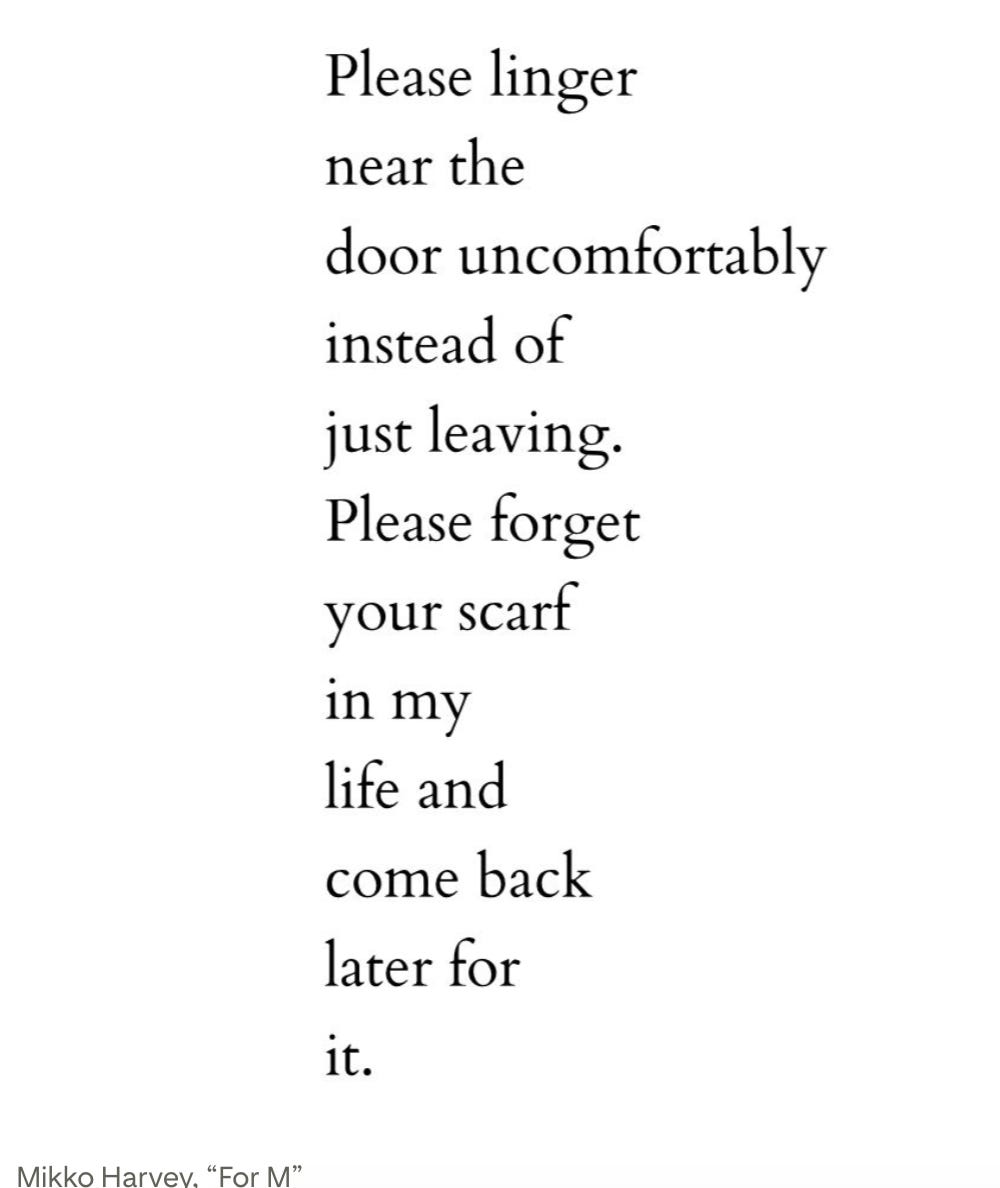
I was painting these deer this morning and thinking about Mikko. I asked him a few days ago if he had been writing about the wars. (He hasn’t responded yet. Mikko! What are you doing?) Many, many years ago, Mikko was a student in my class and also my research assistant. It gives me a jolt of pleasure whenever I see his poems or excerpts of his poem circulated on social media. Like this particular fragment:
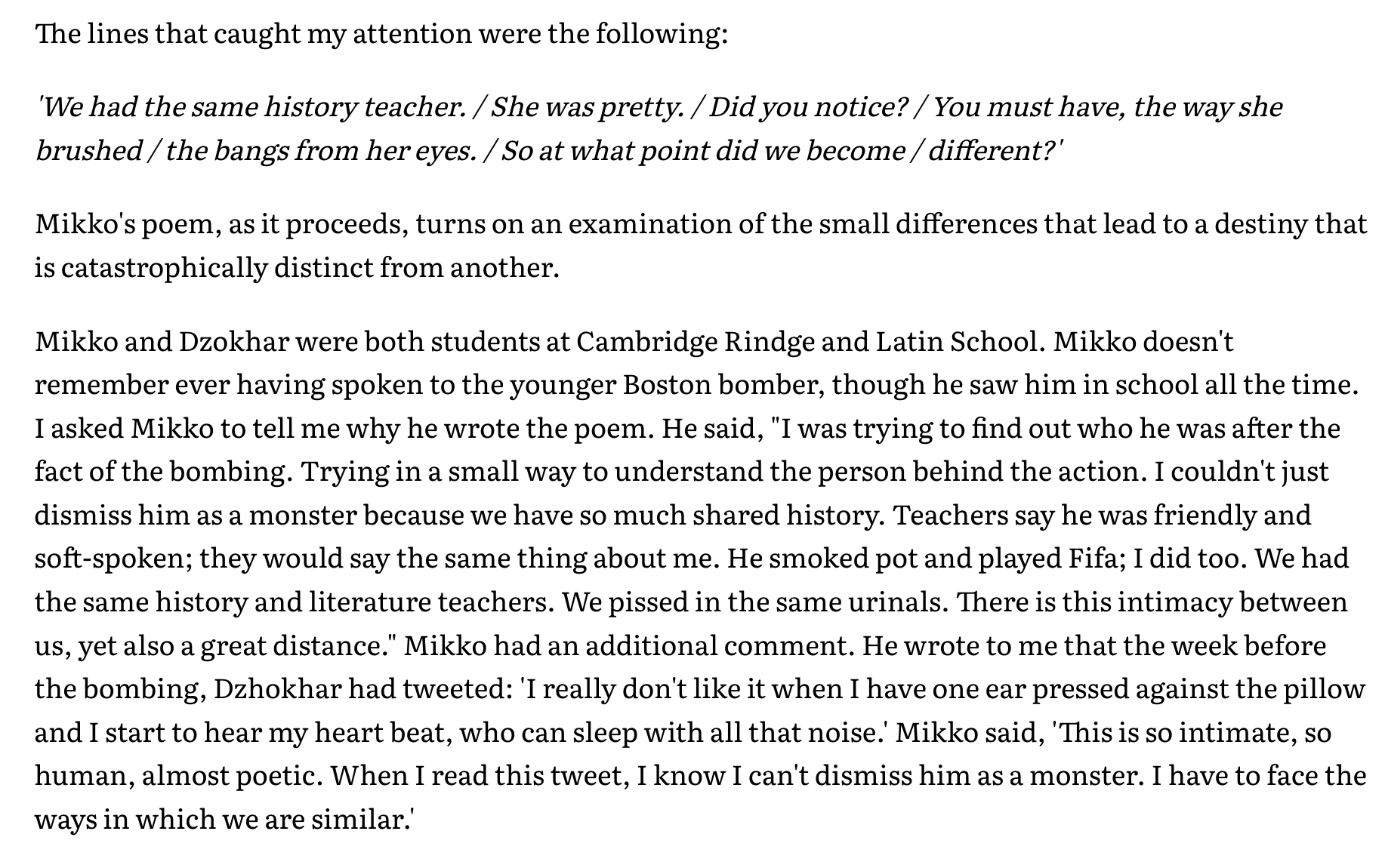
I asked Mikko the question about war because war is on my mind, I suppose, but also because of how I remember Mikko’s writing during his final year here at Vassar. I had written about him for Open Magazine and this piece was also included in my book Lunch With A Bigot published by Duke University Press. Mikko had written a poem in his senior thesis about a boy in his class when they were in high school in Cambridge; the poem’s title was “My Inability to Pronounce Your Name” and now I must reveal that the boy’s name was Dzokhar Tsarnaev, one of the two brothers involved in the Boston bombing. Here’s a relevant excerpt from my essay about Mikko’s writing:
What is literature except a search for the ways in which the human survives.
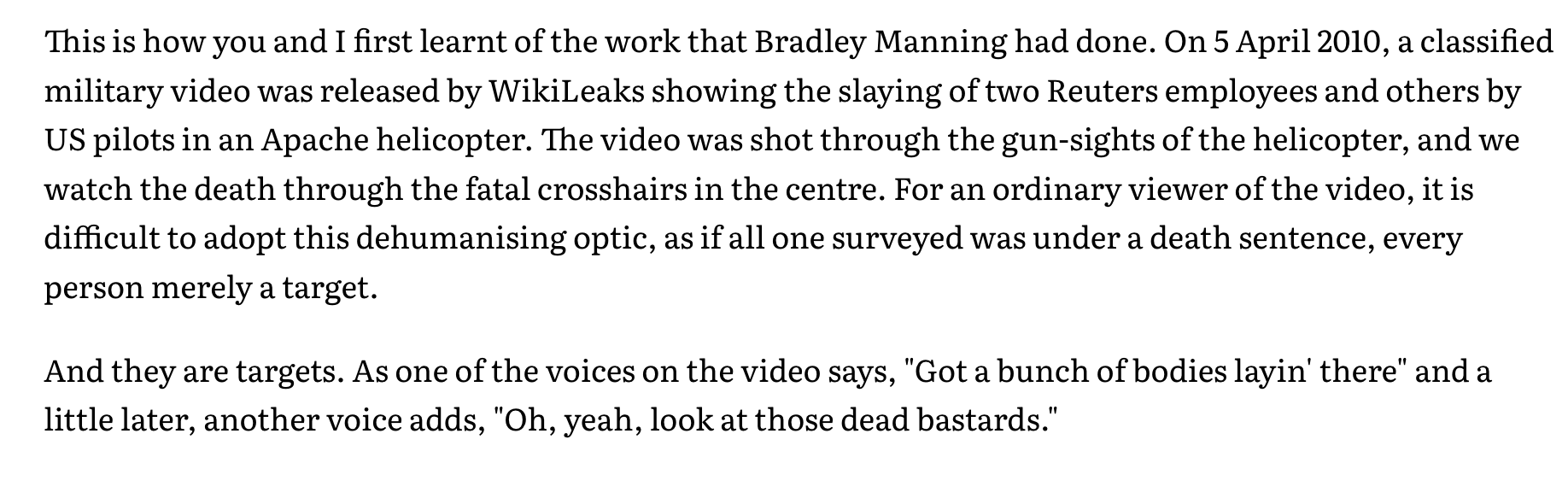
In the essay that I have quoted from above, I had mentioned that just as I was writing about Mikko’s poems, the news on the radio was about the trial of the brave person who was then called Bradley Manning. I was applauding Manning for showing us the reality of war—the Americans in their Apache helicopters delivering death from the sky.
How to rescue the other from the dehumanizing gaze of those in power? Isn’t that tied to the question of how we are to talk to the deer?
Look at those dead bastards! Isn’t that the principal optic that defines our current moment? So many dead! The freshly dead in Iran. The innumerable dead or starving to death in Gaza.
The other day I heard an account by Palestinian activist Susan Abulhawa: I heard it as a reasonable plea for her humanity—and the rights of Palestinians—to be recognized. I was especially moved by her account of a writing workshop she conducted and the work done by young writers whose surroundings—and psyches—had been shattered. A friend in India whom I respect very much didn’t like my post; she said that I should take it down because Abulhawa had said some problematic things in the past. I did. But I have been thinking more about the matter since then. It seems to me that it is only rational to expect an Israeli whose loved ones were harmed by the Hamas attack on October 7 to think of Palestinians in a particular way; and it is also natural, I’d argue, that a survivor of the genocidal violence in Gaza should regard Israelis in a certain light. It is not a balance, I admit. I’m unable to shake off the point about the violence of supremacist violence, settler colonialism, the differentials in power and resources. What to do in such a situation? Do I want to read or write literature that makes the colonizer regard his victim as human? Perhaps not; I’d rather outline their brutal indifference. Do I want to read or write literature that makes the victim see the human in the colonizer? No, not really. It is not my place to be so presumptuous. I want to stay alert to the moments during which the story turns and one’s blindness is made visible. I want to stay in the moment, determined to investigate and report on my struggle to mouth words. Above all, I want to keep talking to the deer.
Lovely, as always. Reminds me of Berger: "“Animals are born, are sentient and are mortal. In these things they resemble man.”
We are also awash with deer, have grown quite fond of them though *our* Berger cannot abide them ...
Weighty reflections...and how short we are. Of true leaders who can reflect on such dilemmas with sincerity and accommodate us all in comforting meanings