

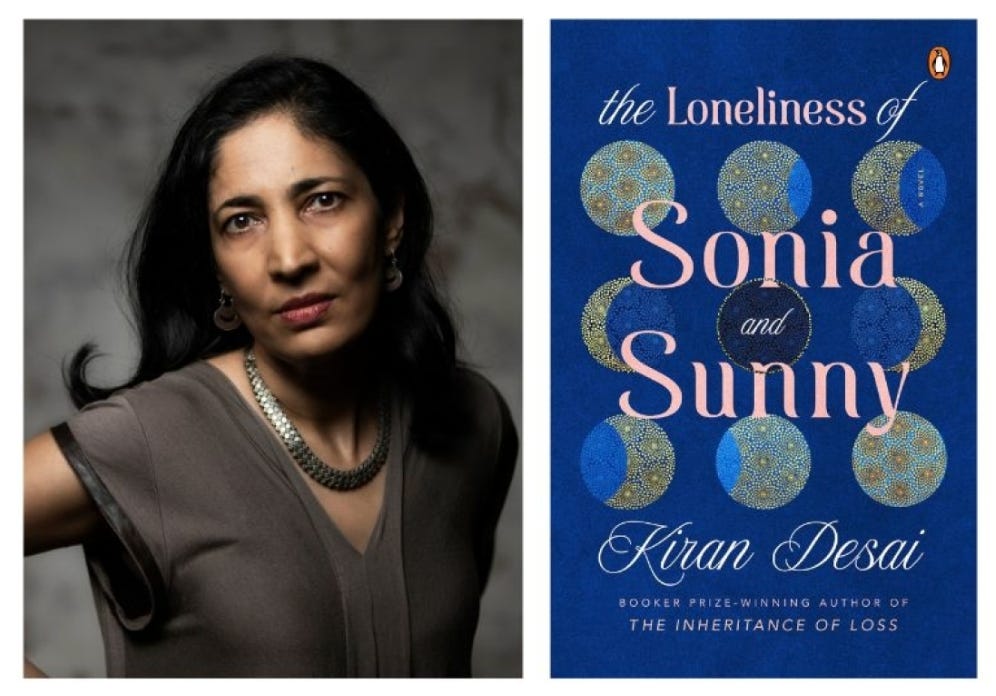
Happy Independence Day, India! On this occasion, I asked Kiran Desai to talk to me about seven lines from her novel, lines that I especially liked and that told us something about us as Indians and also, in a few cases, about writing. Kiran’s latest book, The Loneliness of Sonia and Sunny, was a finalist for the Booker Prize. Her previous novel, The Inheritance of Loss, won the Booker Prize in 2006. Below is our discussion about the lines I had chosen. Before I go to our conversation, here is a link to a recent CNN interview with Abhijeet Dipke of the Cockroach Janta Party where he tells Christiane Amanpour that the biggest victory of the current movement hasn’t been getting the resignation of the education minister but the fact that people in India have become fearless about questioning the government. Dipke says that he was “heartbroken” that the government of his own country called him “a national security threat.” Dipke told Amanpour that he is a patriot, he loves his country but “not in the way that this government expects him to.”
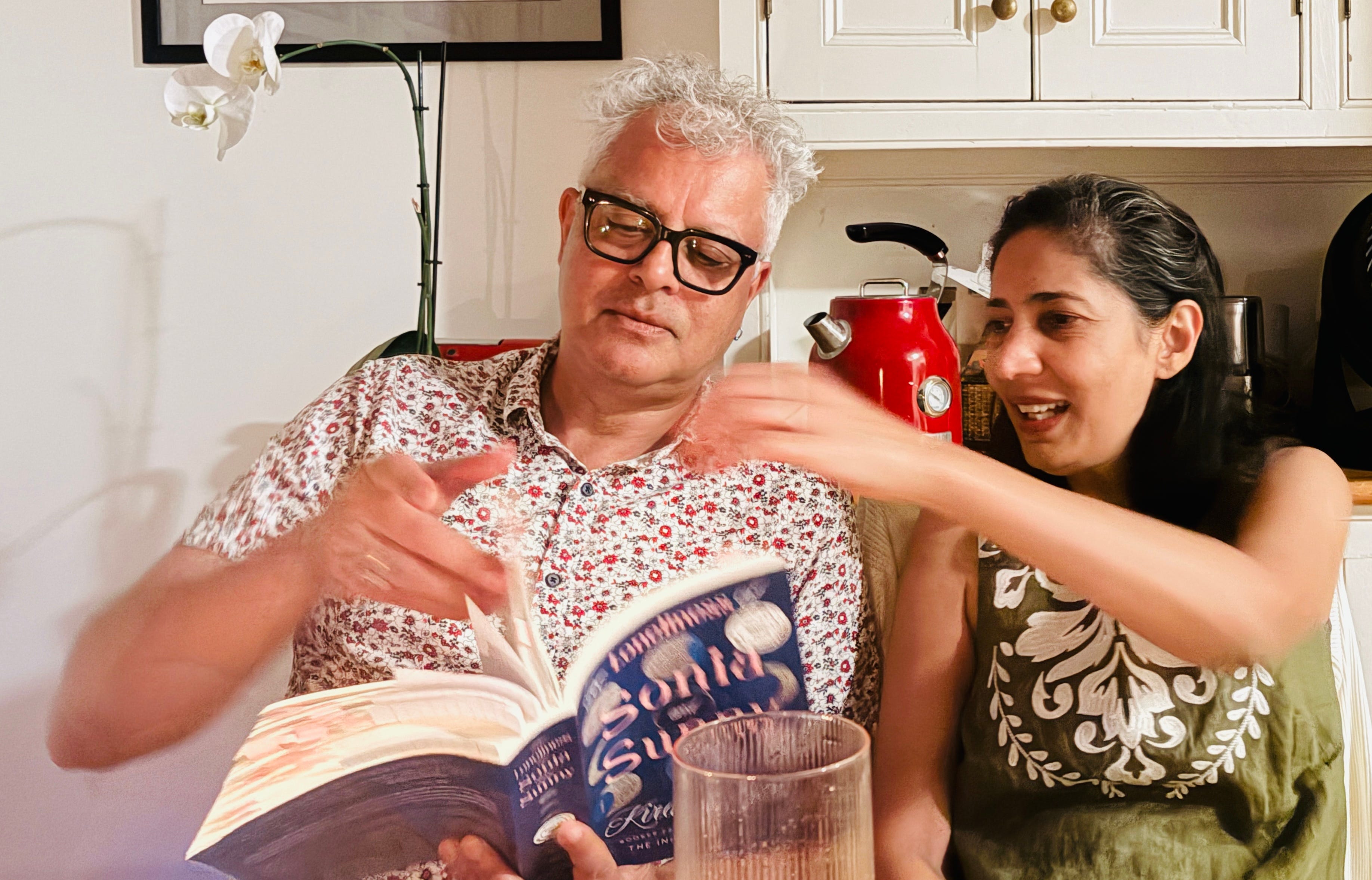
Here are two cockroaches engaged in close reading over rum in the kitchen late last night.
“To be a citizen of a former colonial nation gave a person gravitas.”
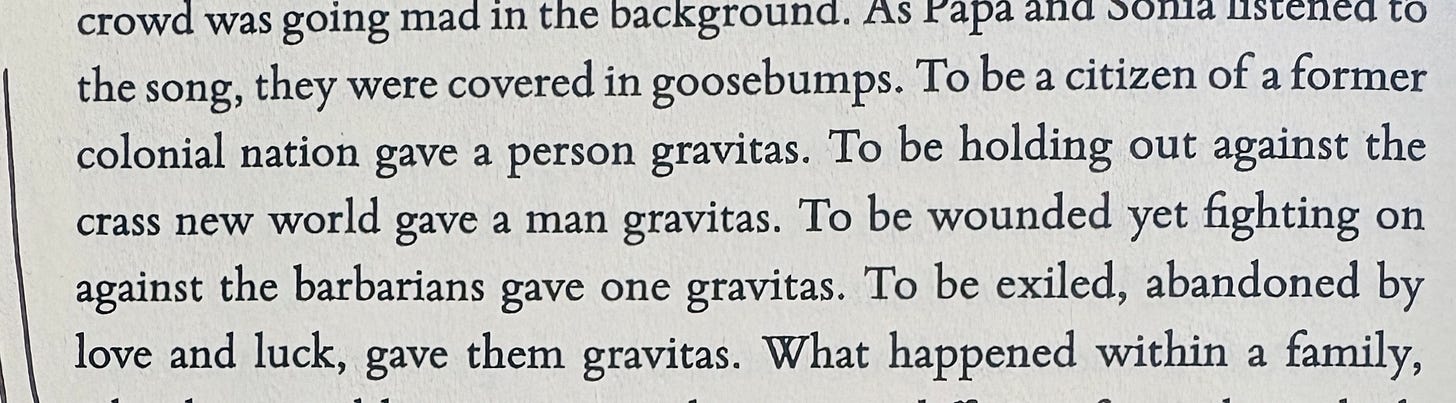
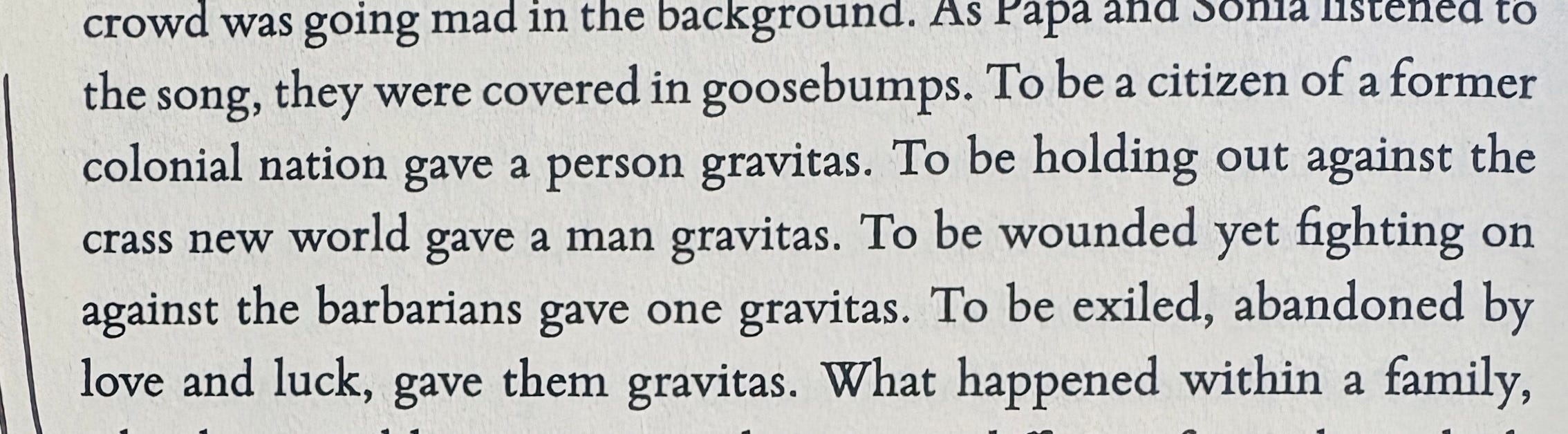
What is happening here, I asked Kiran. Sonia and Papa are listening to the newly purchased tapes of Noor Jehan and Begum Akhtar. They listen to Iqbal Bano singing “Hum Dekhenge.” Kiran didn’t remember where she wrote these lines but she said that wherever she might have been physically, she was sure that emotionally she was on the roof of R-16 in Hauz Khas with her father. Kiran spoke of an episode in Arundhati Roy’s beautiful memoir Mother Mary Comes to Me, when the uncle teaches the young girl who will one day become a writer about failure: “He made failure sound fascinating, even worth striving for. It really made me think. From then onwards I began to view failure with great interest. I realized that the people I like best, including G. Isaac himself, were considered failures. People who thought of themselves as successful and prosperous suddenly seemed like such an embarrassment, the way they strutted around and stole the light.” What Kiran was saying about the gravitas of a person of a former colonial nation was about learning “how to lose with wit and lightness and the way to lose with elegance and dignity.” Yes, yes, I thought, not to want to be like Adani or Ambani but, instead, the students in Delhi and elsewhere who dreamed up such fine slogans to give voice to their rage.
“A good novel reader was a toilet cleaner…”
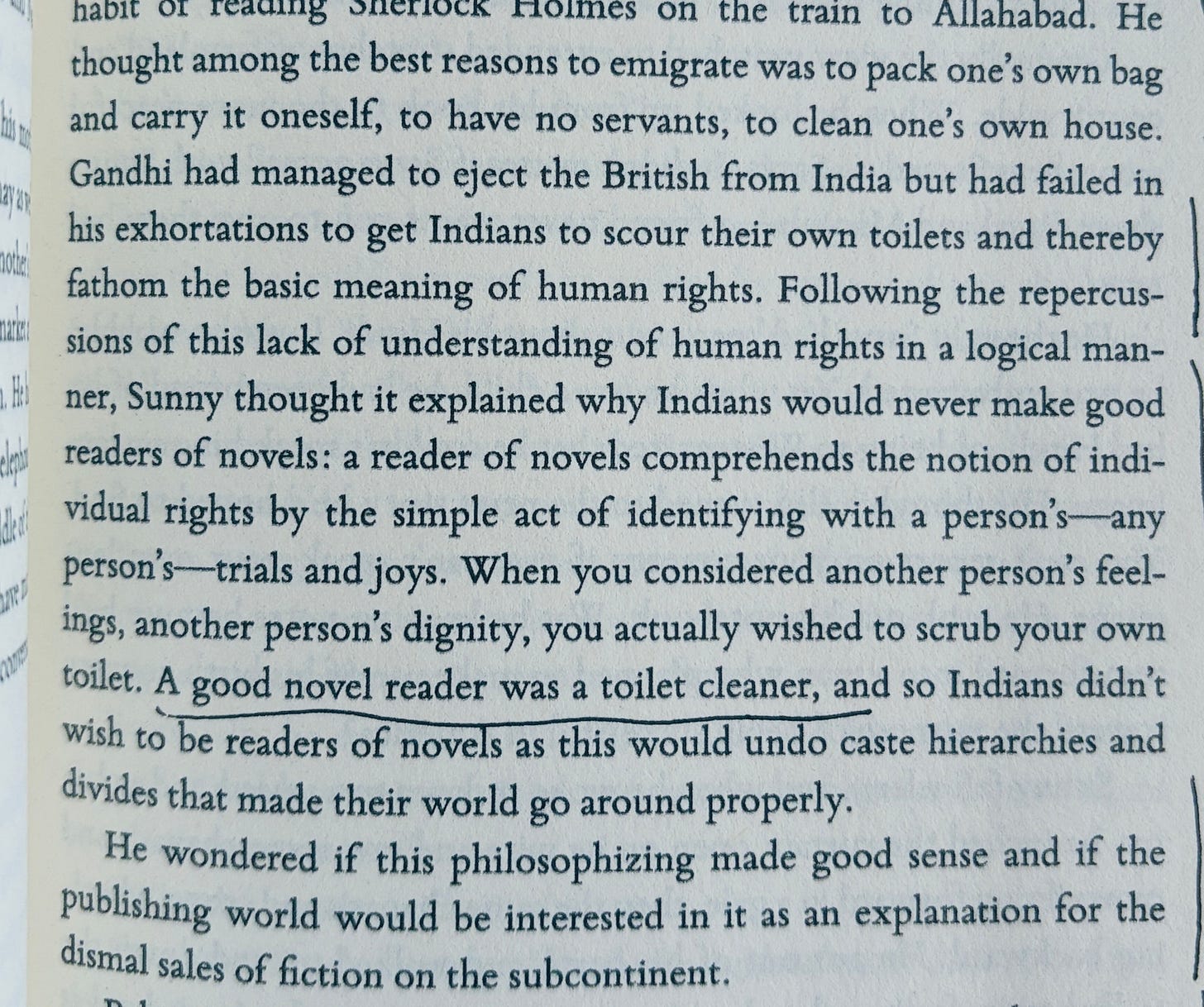
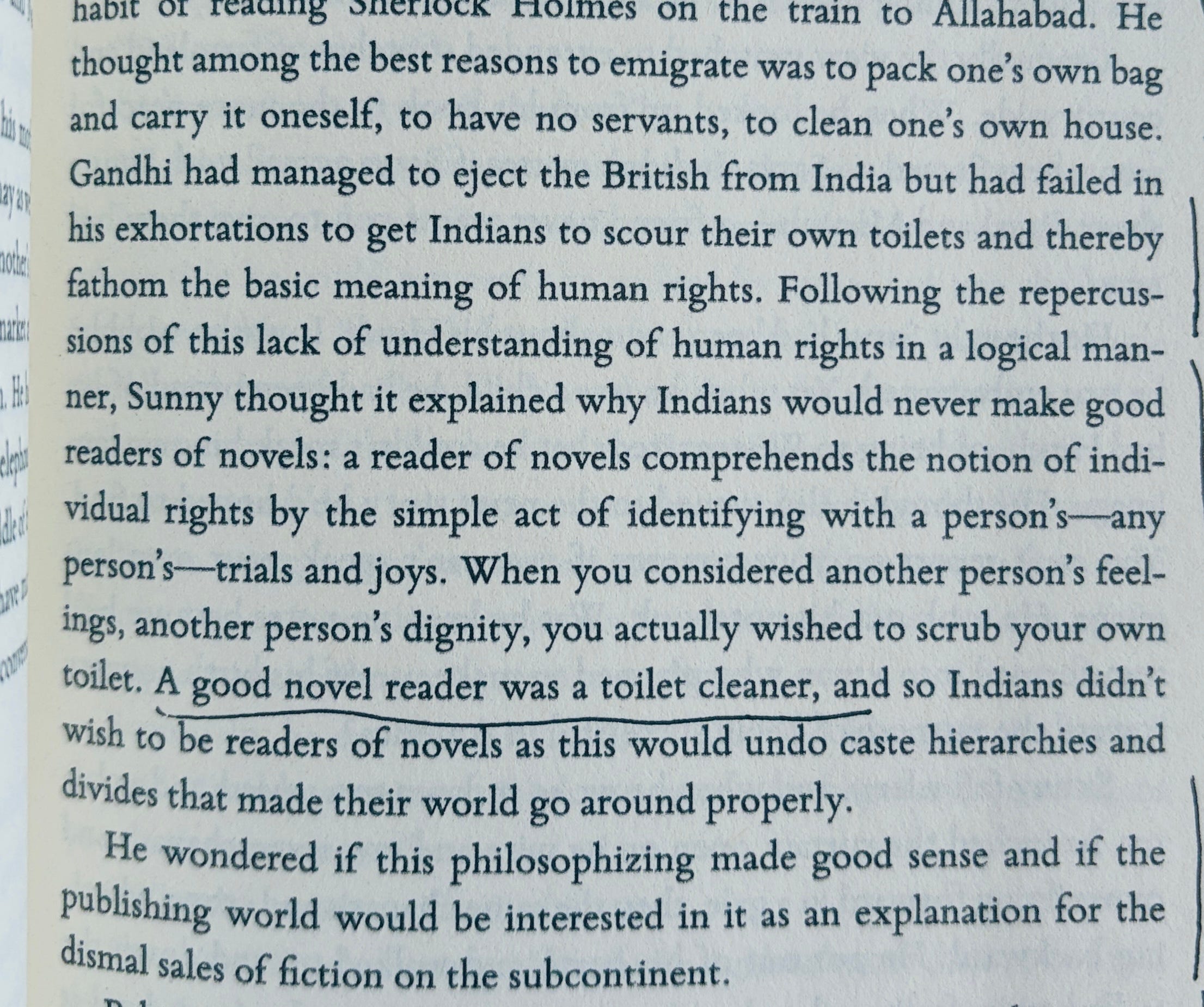
When I read out the line to her, Kiran said that this was “the truest sentence” she had ever written. She said she thought about this every day. Had I read Mulk Raj Anand’s Untouchable? She called it an extraordinary book. “Very few upper-caste and upper-class Indians have managed to learn this lesson. They have not ever cleaned their own toilets in their entire lives.” Shit is a a good metaphor to explain so much in India. Who has access to a toilet and who doesn’t. Who cleans the toilet and who doesn’t. Kiran visited a cave-temple in Hampi. There were some school-kids also visiting. They were asked to leave their shoes in the bus that had brought them. Kiran saw that they were forced to walk barefoot in the shit that was on the toilet floor.
“From?”
“Bihar.”
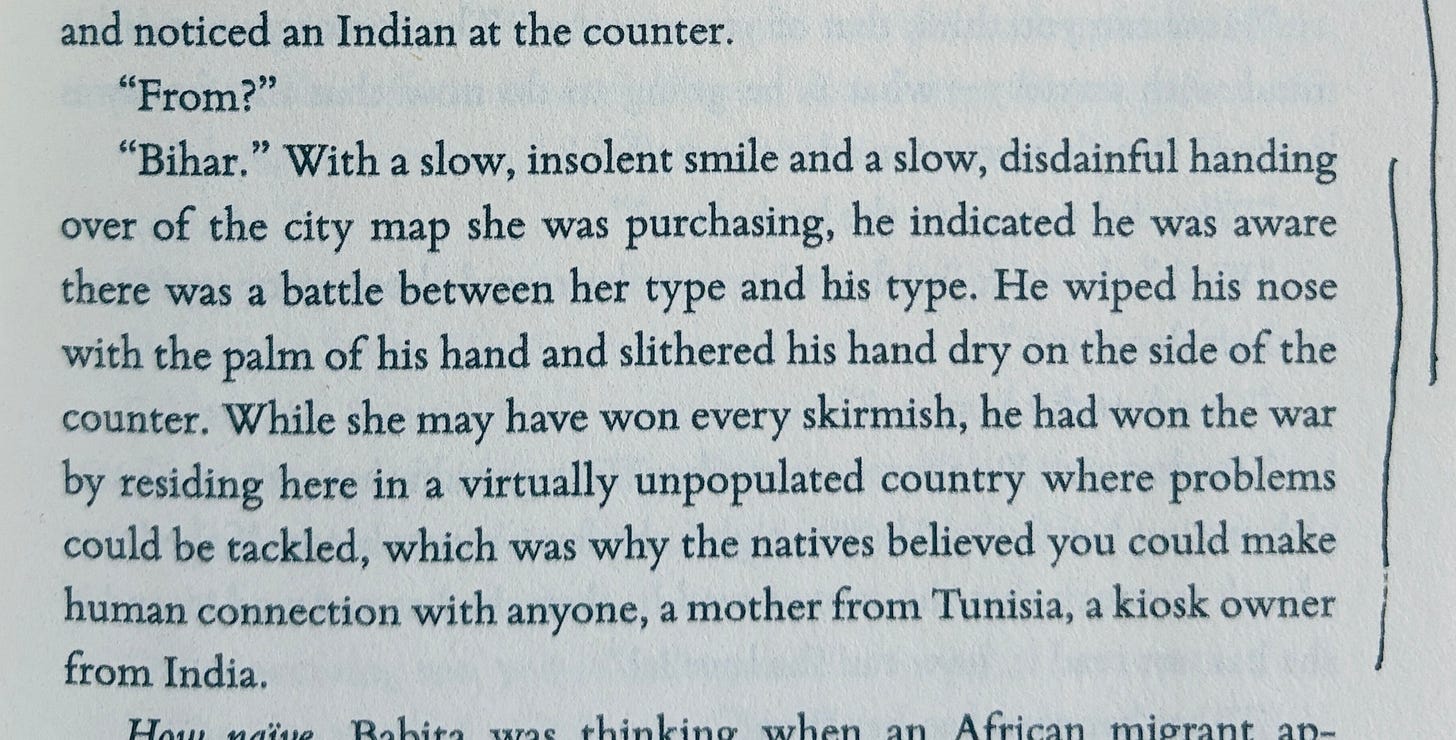
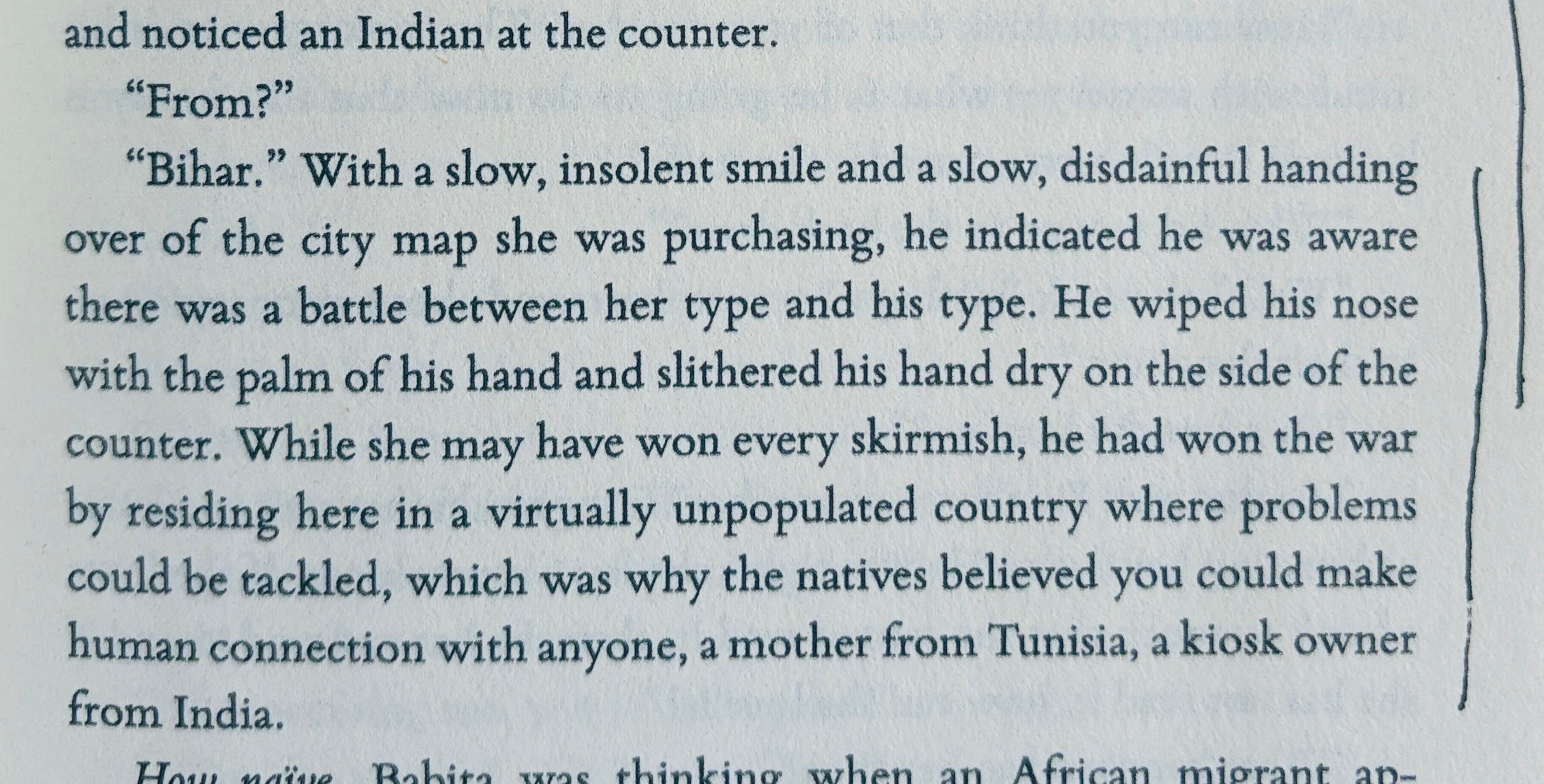
Babita Bhatia, the upper-class lady from Delhi, is visiting Stockholm. She sees a working-class Indian in one of the stores. This brief exchange ensues. These immigrants have come from a place where no problem can be solved. And now they live in a place where problems can be taken care of. The upper-class Indians have lost the war. They believe that they are leaving behind Indian problems when they visit the West. It is a shock to them when these well-heeled tourists visit a little village in France and see a poor Indian waiting to greet them with curiosity or even contempt.
“How could he become a journalist in India where he understood nothing?”
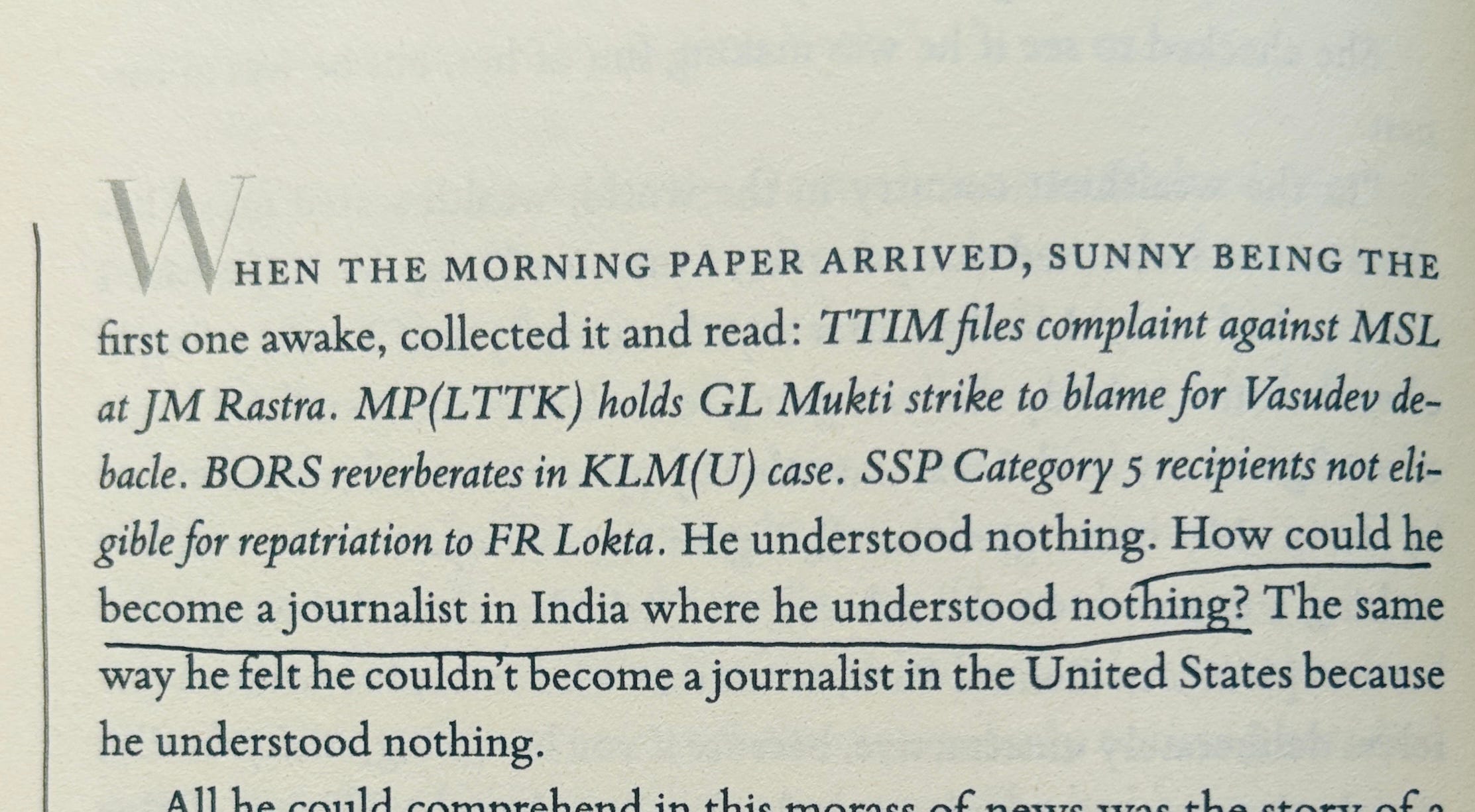
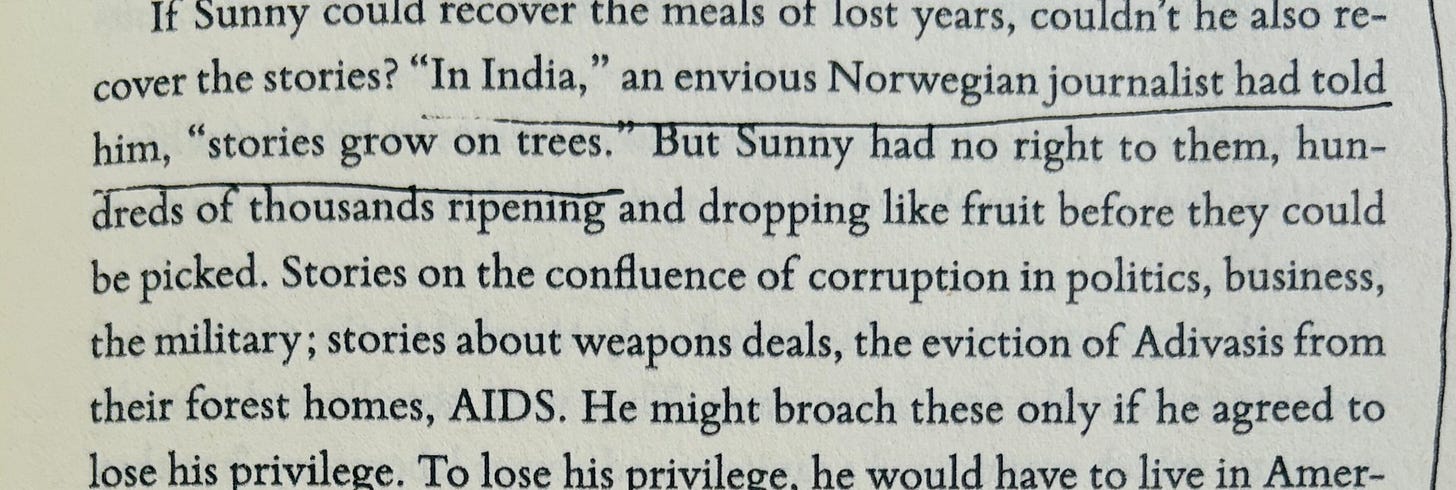
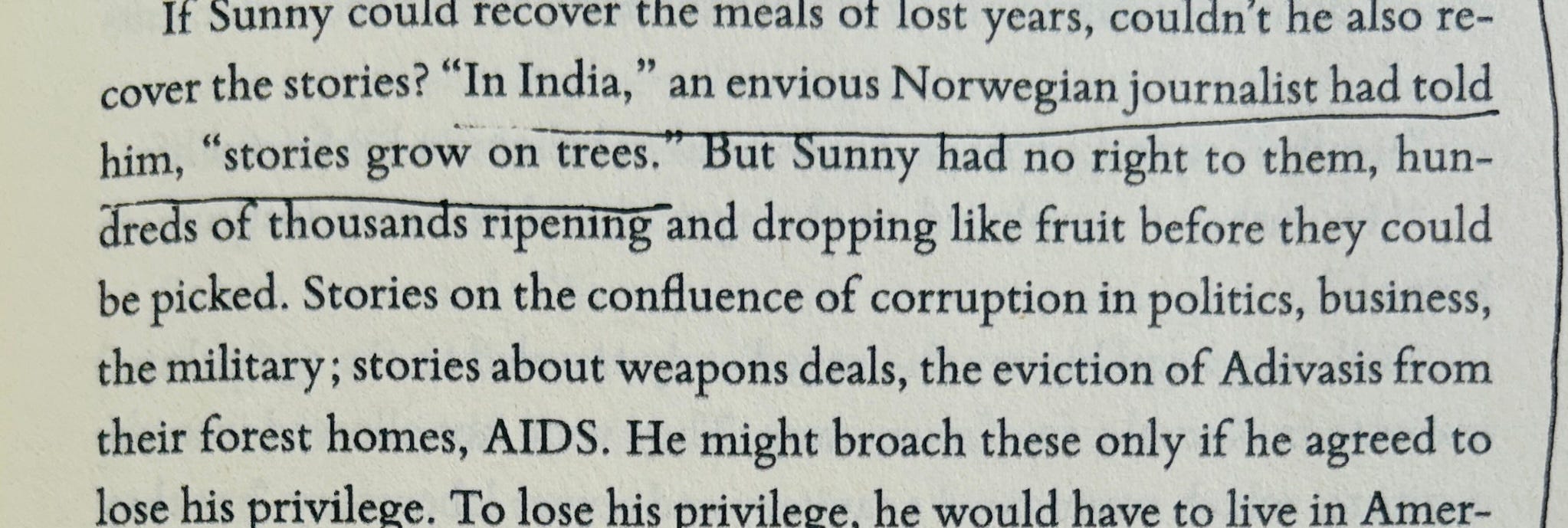
“This is an accurate conundrum,” Kiran said. “It has probably happened to many of us, including perhaps Rahul Gandhi, even though we hope he defeats the evil forces.” You are in a place where you know nothing and understand nothing, and the entire status of your mother (Kiran was thinking here of Sunny) depends on your knowing nothing and understanding nothing. Balanced against this is the envy of the others who think that their landscape yields so few story. A Norwegian journalist tells Sunny, “In India, stories grow on trees.” This is interesting to me, Kiran said.
“In India,” an envious Norwegian journalist had told him, stories grow on trees.” See above.
6. “… propagated by a professor whose appointment to a newly declared India studies chair had been sponsored by a group of New Jersey Indian American professionals.”
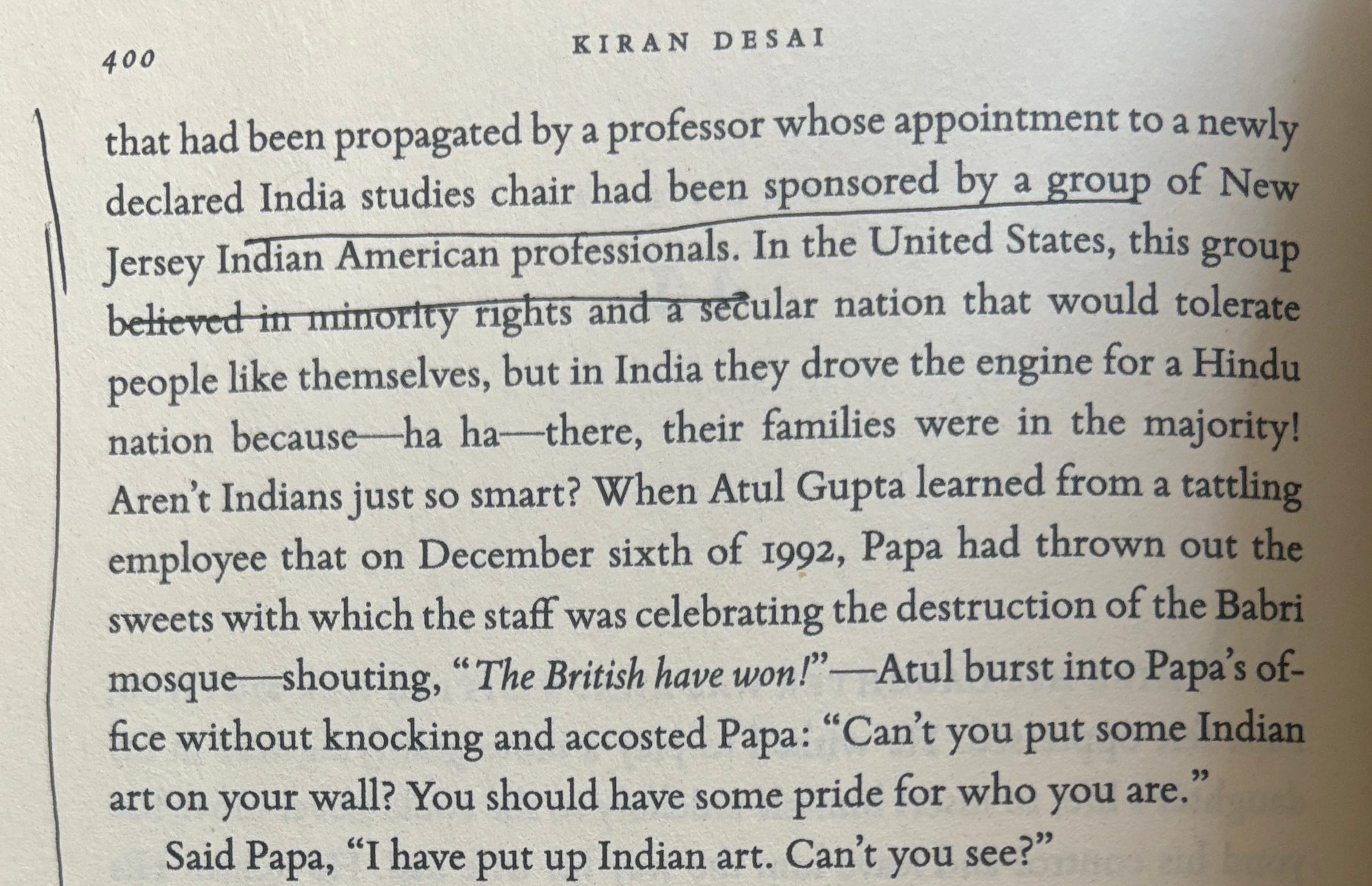
This had happened to her father, Kiran said. The atmosphere in his office in Delhi had changed and it was the influence of a younger generation that had returned from the U.S. At that time, Modi was in Gujarat. Kiran’s father didn’t live long enough to have to face the reality of Modi becoming Prime Minister but he warned about the danger of Modi’s ascent to power. Kiran said that her father “hated Modi with every molecule of his being.” It is clear that Kiran, as an Indian living abroad, isn’t likely anytime to declare, like this woman in London, that Modi is her living god.
“They call themselves global citizens. Bah! Global bastards, more like!”
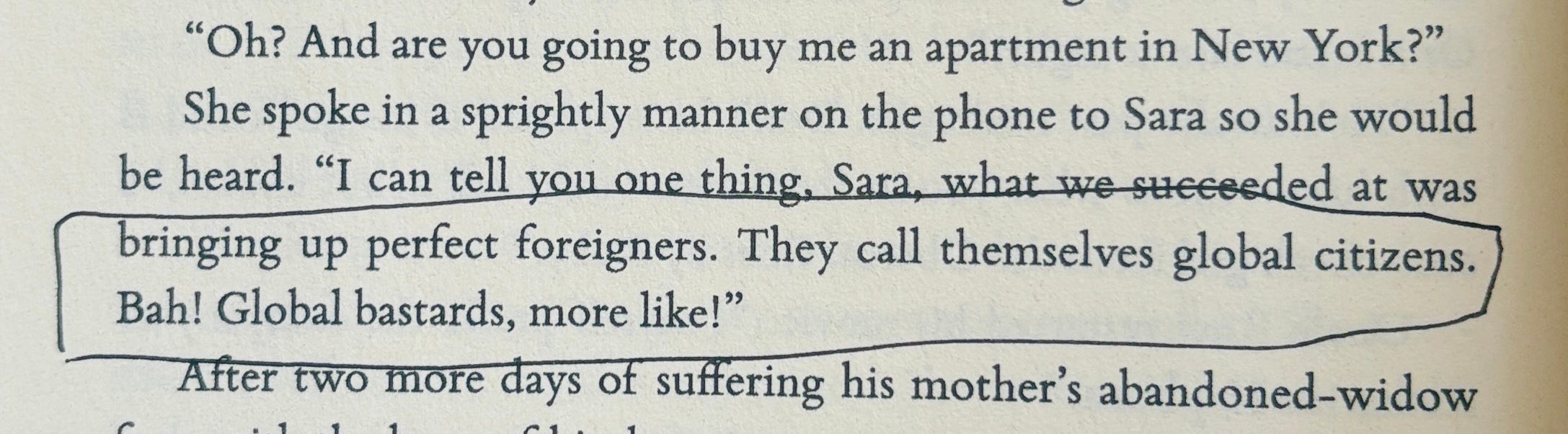
I requested a commentary on the above lines. Kiran said that this was another episode rooted in the memory of her father (to whom this novel is dedicated). Her father told Kiran that she shouldn’t be sentimental, if she got the chance to do so she could very well change her passport. However, when she did this, her father was extremely upset. He couldn’t bring himself to talk to her all day. Kiran’s father was determinedly proud to be living in his homeland. He spoke out of a sense of belonging. She said, “He was a real Hindustani.” She once heard him say the above lines. She was aware that to her father she had become an illegitimate international but it was also true that he would be there waiting for her at the airport when she arrived in India and welcomed her home.
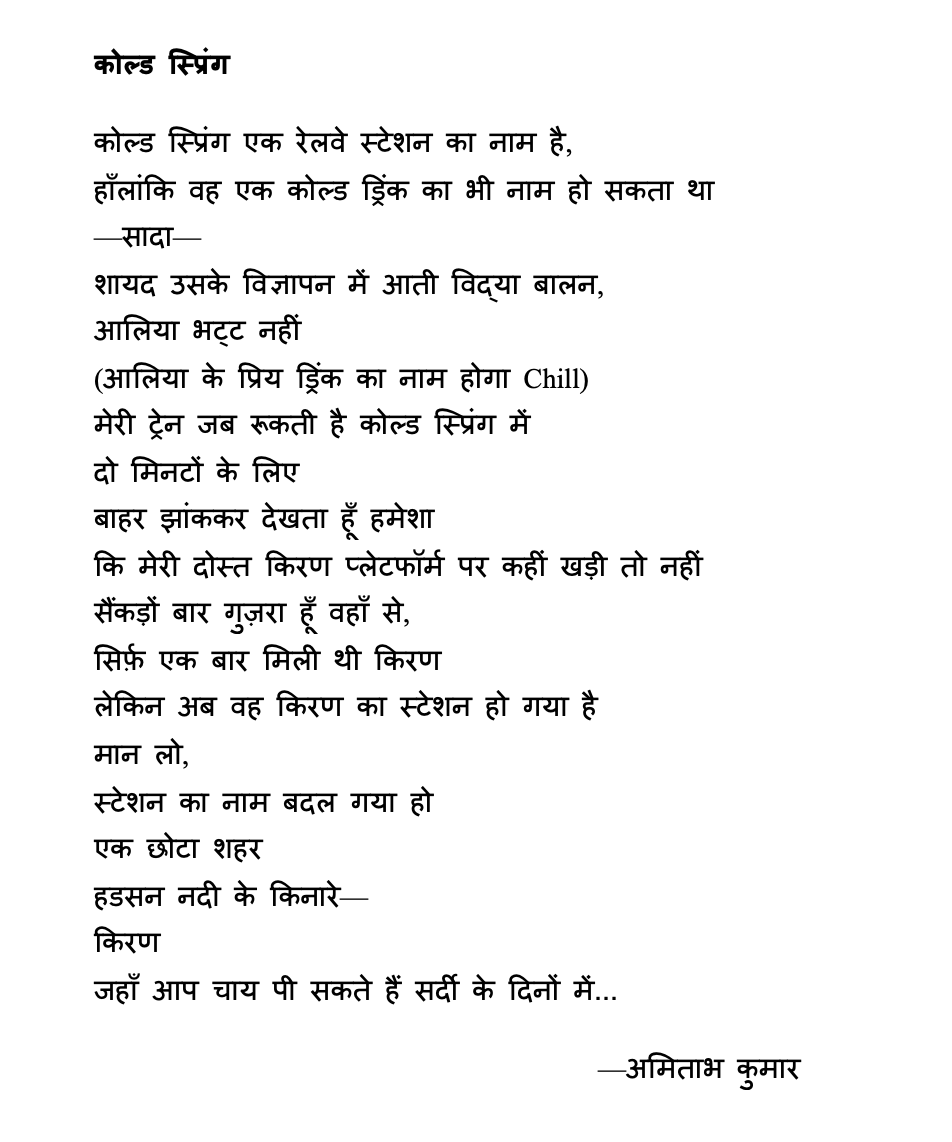
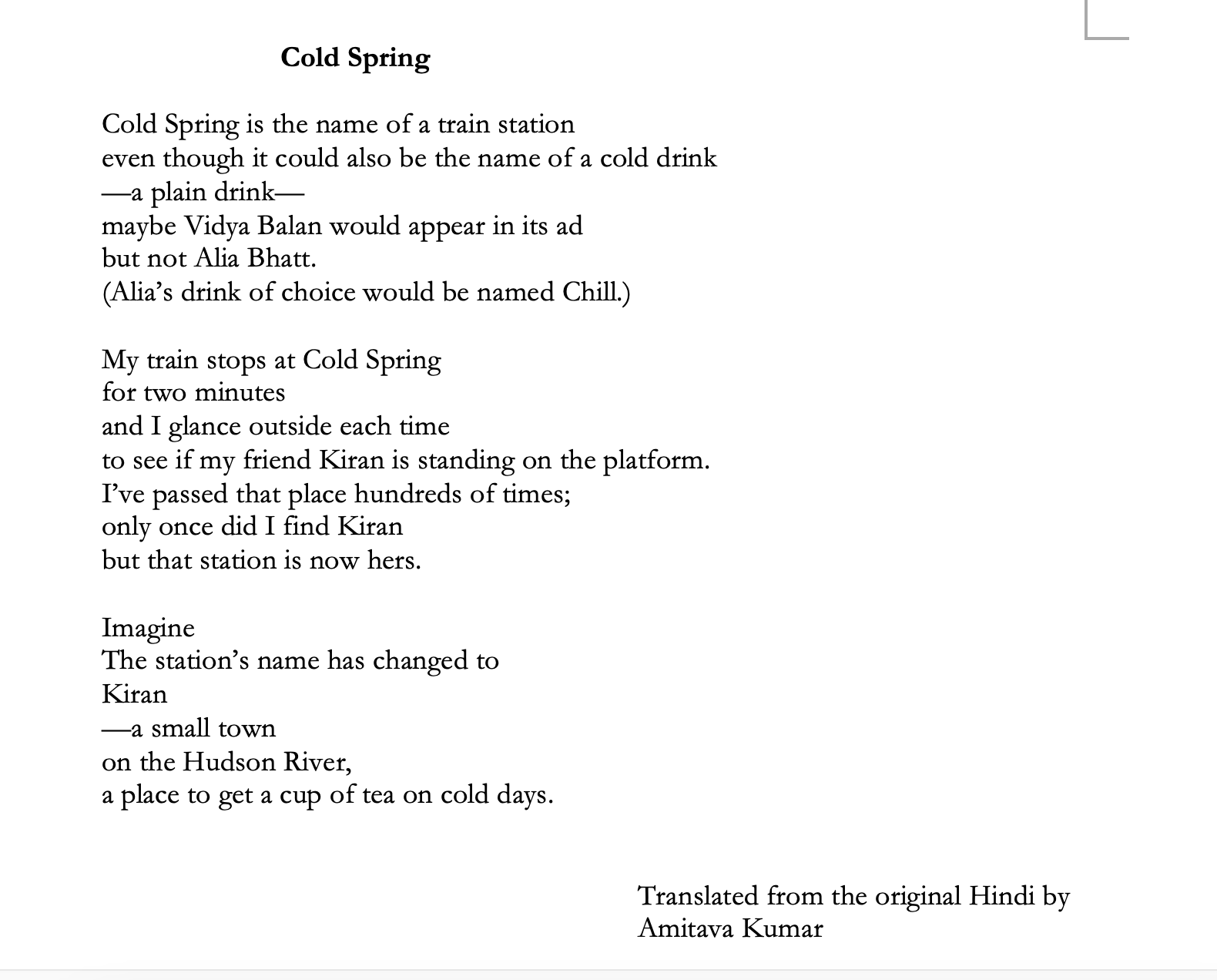
In the end, I want to post for the readers of this Substack, a poem I had written for Kiran some years ago. The original poem was in Hindi, and then I had translated it myself to English. Below are the two versions:
What a collection and thank you immensely for doing this, in the big literary meets this is what we miss out on, our favourite lines from the book, and what it means for the author. Loved this interaction between you two. Long live the friendship ❤️
I am reading Sonia and Sunny right now and loving it!