
Ben Lerner Is Calling
A new novel, Transcription, is out on April 7


The Spring break at my college has begun—among other things, I have a stack of papers to grade; in the meantime, my students have scattered all over the world, one is in Florida, and another at a wedding in Hyderabad, a third submitted their paper from Paris—and I, despite the work awaiting me, needing to grasp a sense of freedom, a breath of fresh air, started reading the advance reader’s copy of Ben Lerner’s Transcription.
I had handled my guilt by saying it was a short book, I wouldn’t shirk work during the break, and I also like short books that can shatter your world and also make you whole again. But none of those feelings mattered when I started reading. When Lerner’s book begins, the narrator is on his way to interview his ninety-year-old mentor, Thomas. Before he can leave his hotel, he drops his smartphone in the sink in the bathroom. Water seeps through the cracks in the screen. How is he to now record the interview?
Often when people talk about novels, they speak of getting lost in another world. I don’t think this is the most accurate way of describing Lerner’s writing. Rather than finding entry into another world, what I find most affecting about this work, perhaps because Lerner appears to be reporting with such precision from this world that we all inhabit, is often like a jolt of recognition. I see my surroundings more clearly and grow aware of my thoughts and the processes through which my emotions take shape. This is the best way I can describe that loose term “autofiction.”
In a few weeks, there will be reviews of the book and I know that critics will point out how intelligently and imaginatively Transcription offers a meditation on the role that devices have come to play in our lives. (The narrator’s friend Max, Thomas’s son, has been named after Max Horkheimer. Thomas, we learn, went to concerts with Adorno. This is a book about the culture industry, a new world undreamed of by the Frankfurt School.) Also, themes of parenting, aging, memory, loss. But what makes this novel so profound is that it investigates and expands the possibilities of fiction itself. This is literary work of the highest caliber. The three parts of the novel, each titled after the name of a hotel, enact a structural play that is startling in its stylistic brilliance. (Seven or eight years ago, when Lerner’s last novel was published, it was a finalist for the Pulitzer Prize. There is every reason to hope that this new novel, compressed under pressure and glittering like a poem, will also win all kinds of praise and prizes.)
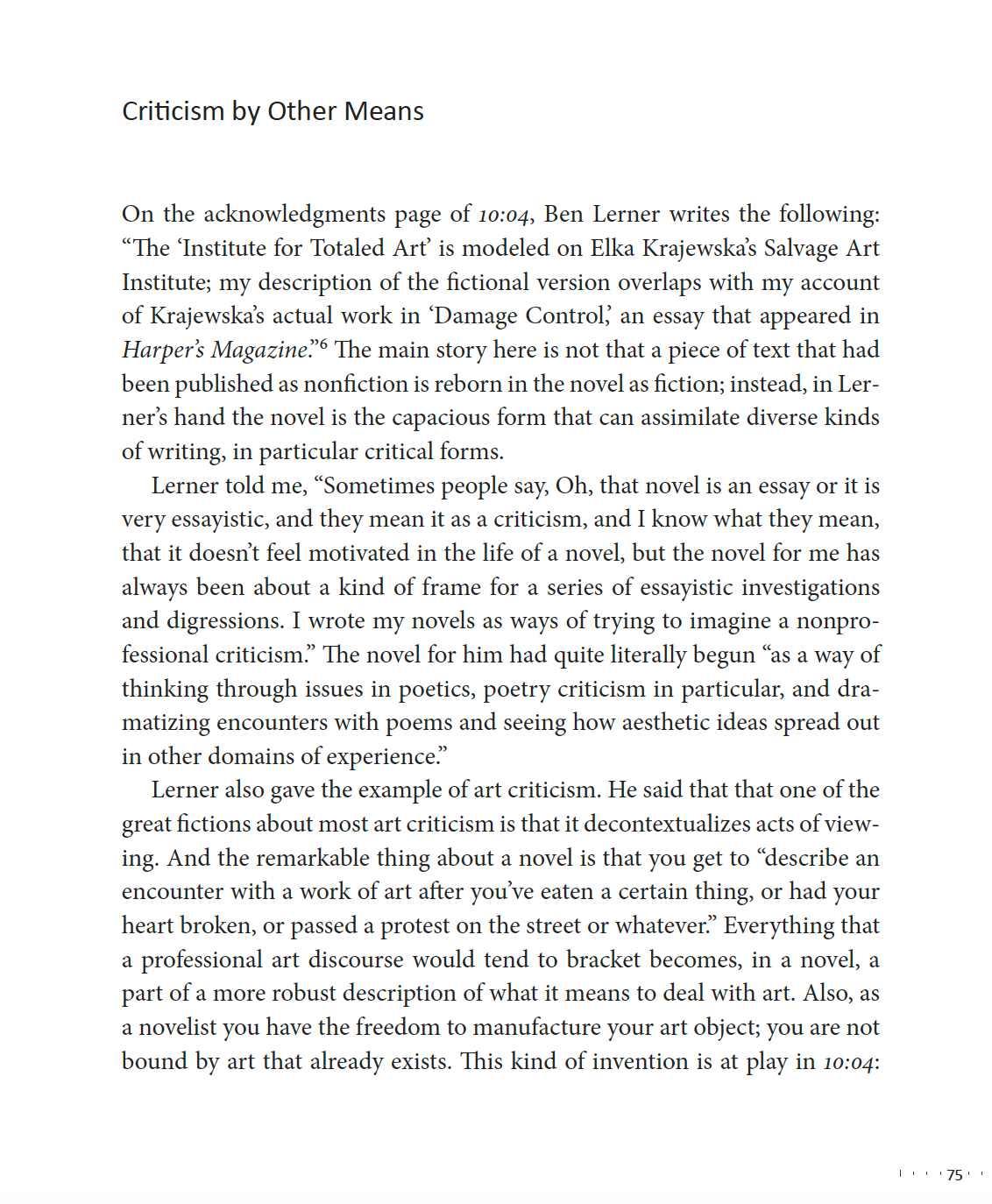
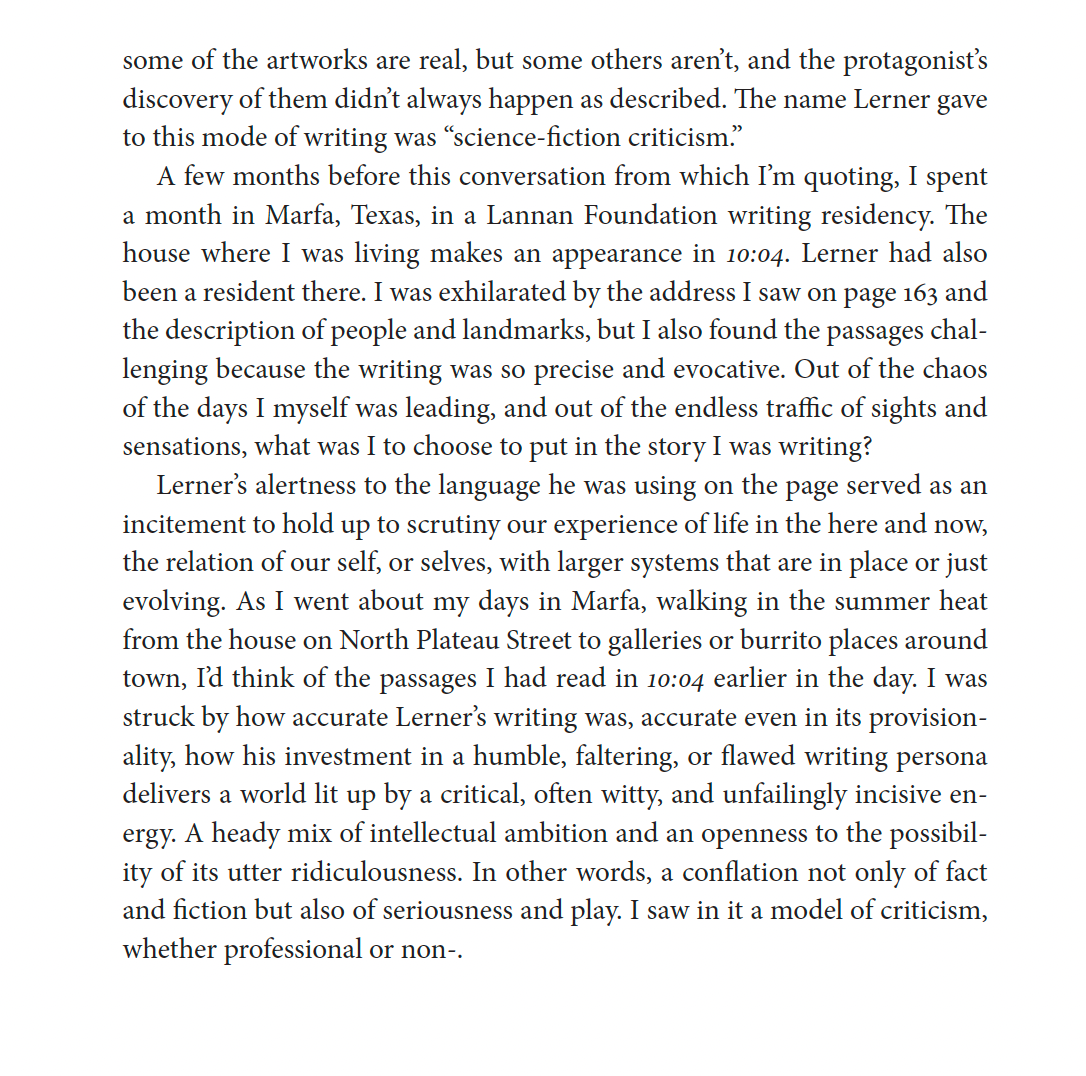
A decade or more ago, when working on Every Day I Write the Book, I did a little transcription of my own after I had interviewed Lerner in a cafe near my college. A bit like 10:04, the work I was discussing with Lerner at that time, Transcription also gathers some of its force by engaging in a conversation broadly with culture and also more specifically with art:
Post-script: For those who have read so far, thank you. Please join #APSTogether if you want to receive my daily notes when we start the month-long reading of The Enigma of Arrival by V.S. Naipaul. Also, my friends at Story Studio Chicago have put out information about an online workshop for nonfiction writing that I will be leading in August. Applications due by March 27. More below, and thanks.


Seems I need to pick up some Lerner. I'm beginning to feel constricted by my usual voice. I do read your "Every Day..." and it helps. And yes, I read to the end. . .