
A Republic In My Imagination
On the Poetry of Shrikant Verma

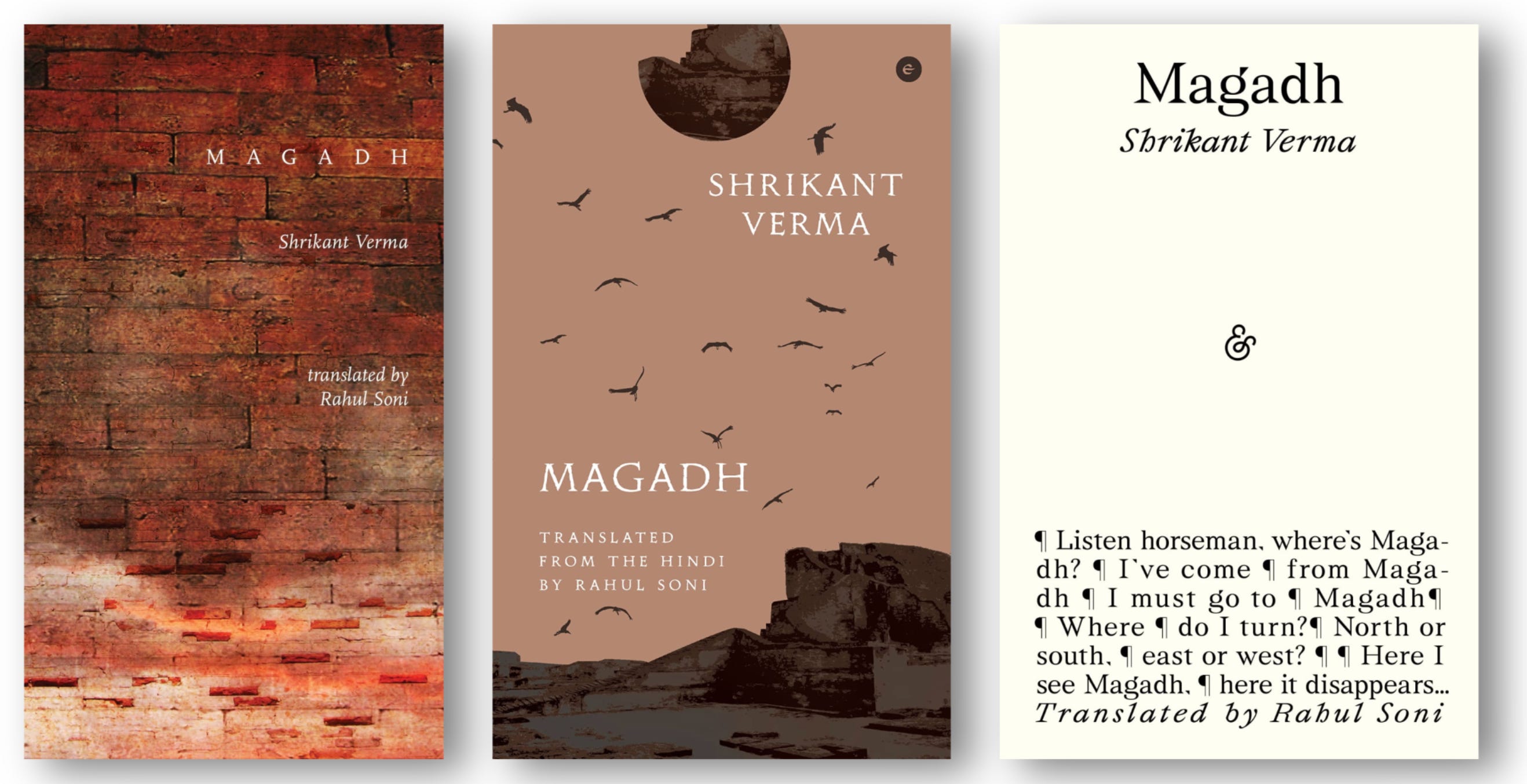
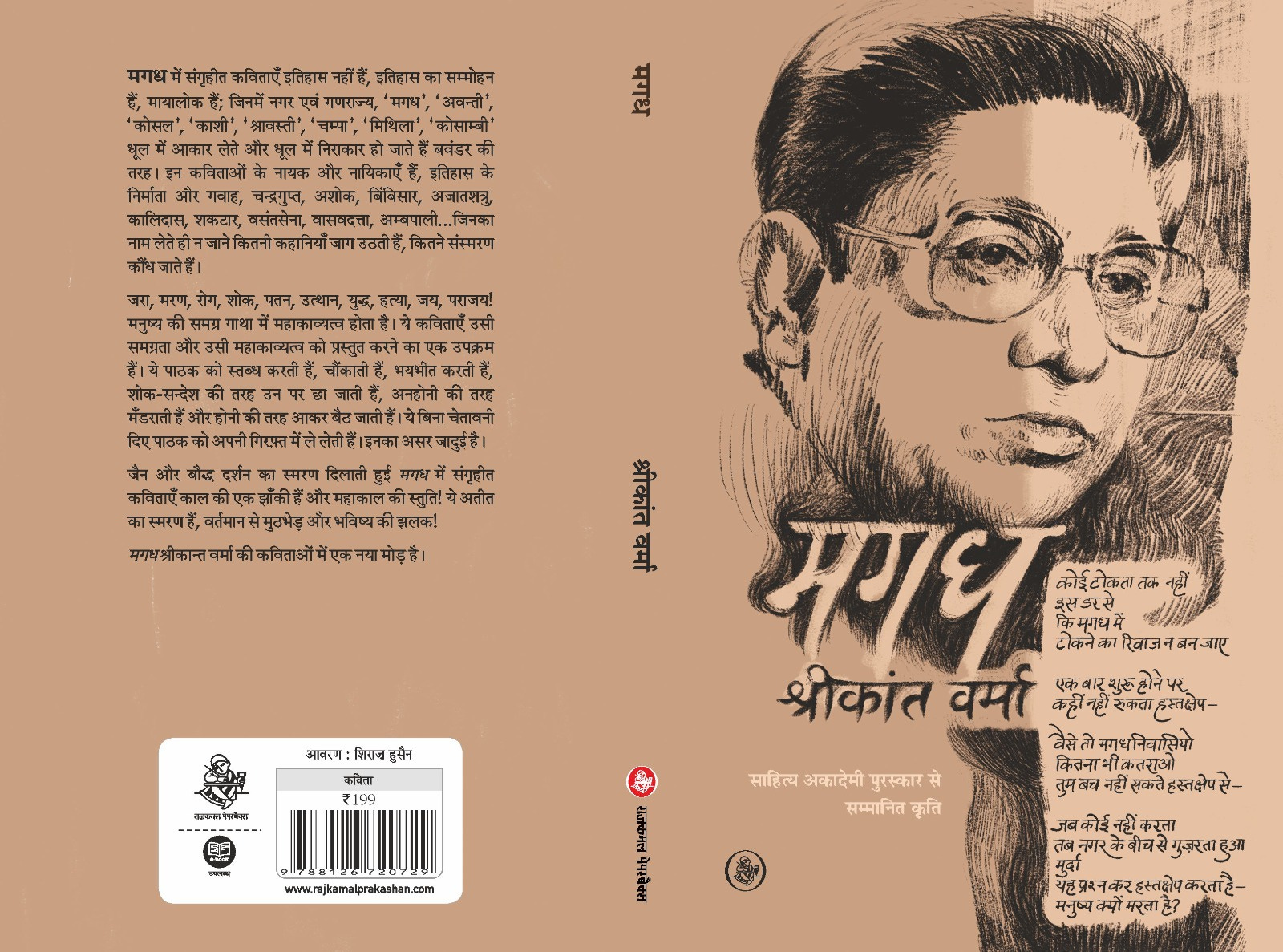
I have recently received an advanced reading copy of Rahul Soni’s translation of the Hindi poet Shrikant Verma 1984 classic, Magadh. In May this year, the book will be published in the U.S. by Liveright/W.W. Norton. Soni’s translation of Verma had been published earlier in India and the U.K. If you are in the US, you can pre-order it here. For readers in India, the English translation is available here, and the Hindi original is available from Rajkamal Prakshan.
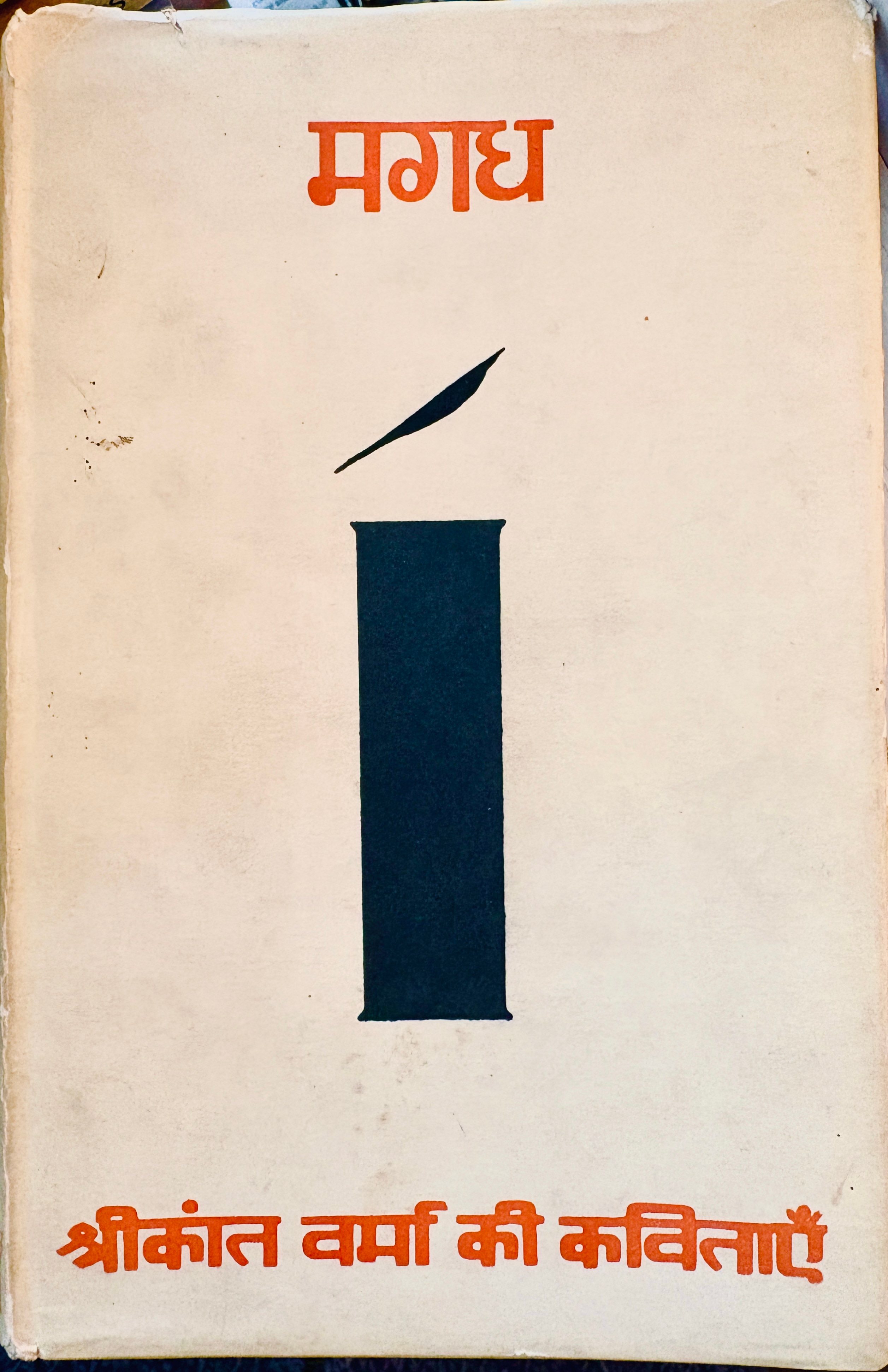
I read the poems in Soni’s translation with great admiration: the lines rendered so cleanly, they convey the spare, stately elegance of the original. After reading the poems in English, I picked up my copy of the original collection in Hindi. I had bought it when I was twenty-one; this book with a cream cover and the etching-like art by J. Swaminathan. Verma’s poems with their invocation of names from history and mythology—Magadh! Takshila! Pataliputra! Ambapali!—seemed to be about our past, and yet, they speak also to our debased present. It was a bit like the way things were on the street: the names that occurred in the poems (and in history and myth) were now the names of jewelry stores and showy restaurants and seedy hotels in dusty towns all over my home-state Bihar. And yet, when I went back to the poems in Hindi what overwhelmed me at once, again, was the language, resonant and rhythmic, vividly alive, constantly alert to history’s inescapable contradictions.
Shrikant Verma was a journalist and a poet, yes, but he used to regularly appear on Doordarshan television also as a spokesman for the Congress party. When Magadh came out in 1984, I went to a reading by Verma at the India International Centre. I could grasp that here were poems that were deeply political but I couldn’t quite unravel the contradiction that they were written by a politician who not only belonged to the ruling party but also provided it a language in which to articulate and defend its policies. The poems attracted me but they were the cause of confusion in my mind. (What do I know now that I did not know then? That an artist, and every person for that matter, is made up of different parts?) A year or so after Magadh was published, I began to plan my travel to the US to begin my graduate work. Then I read in the Delhi papers that Verma was sick. He had cancer. He was brought to a hospital in New York. He was only fifty-five when he died. This was in May, 1986. I arrived in New York three months later with his book in my suitcase. His poems have always been with me.
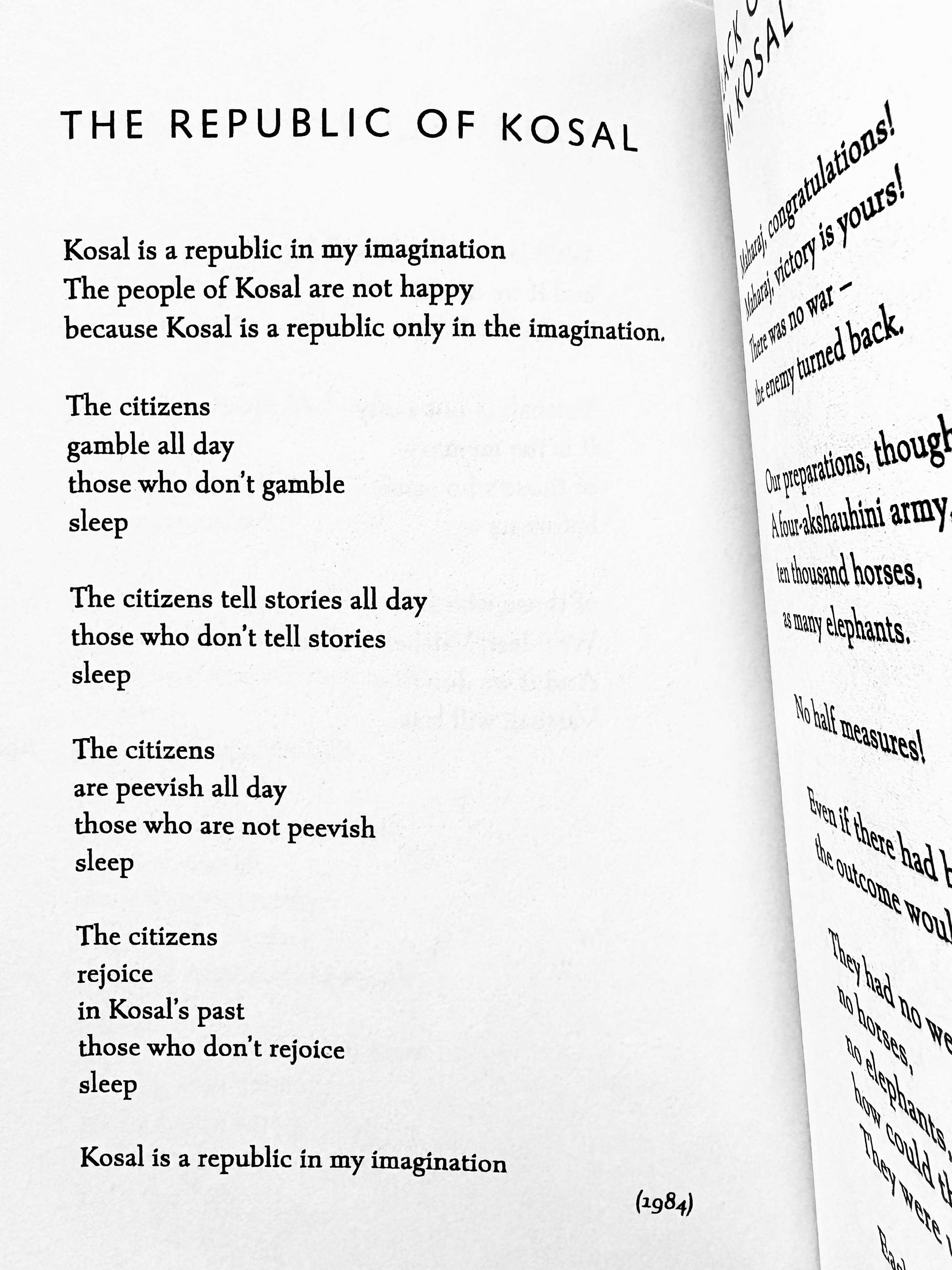
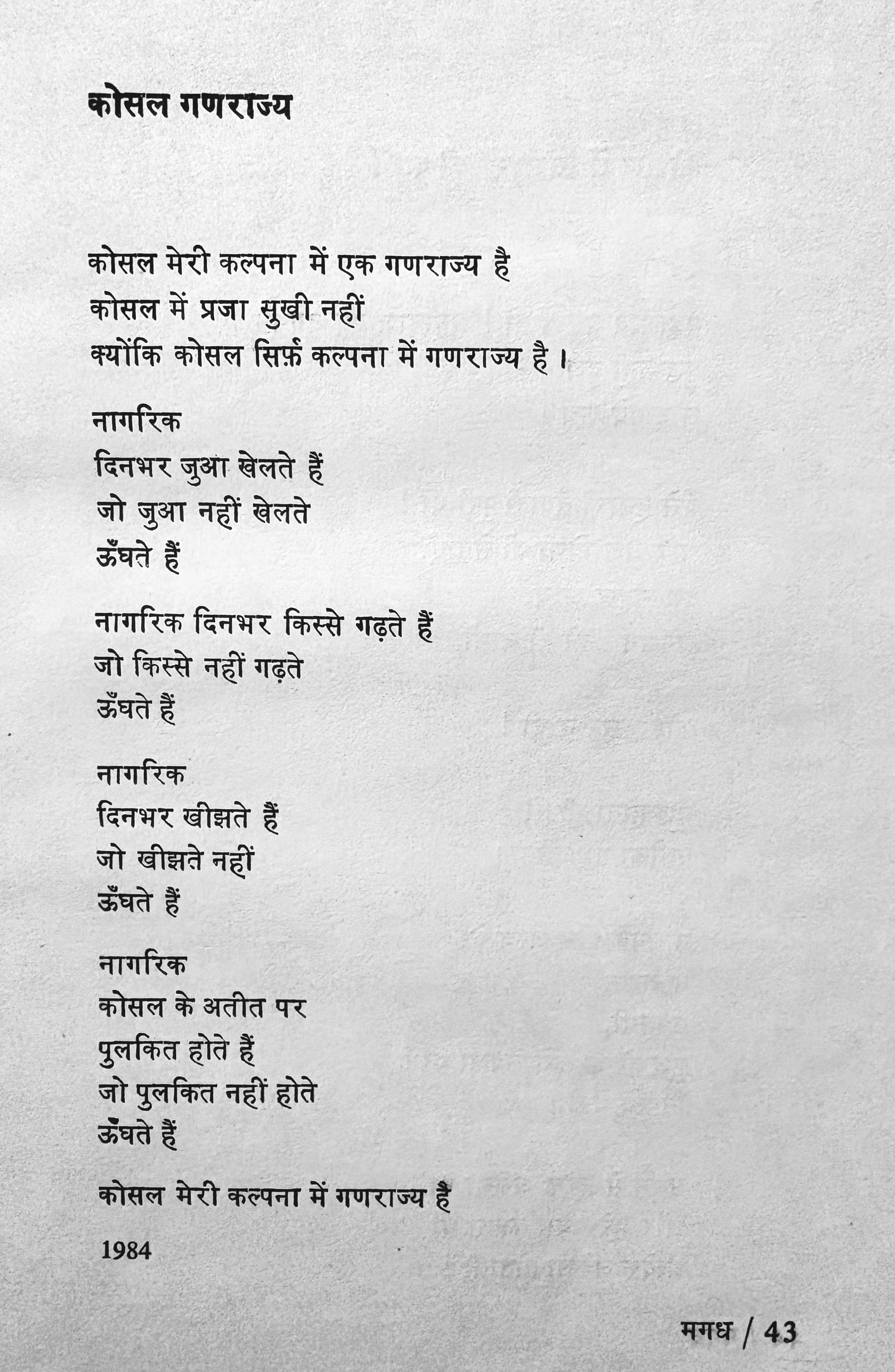
A poem like an iceberg! Thank you for sharing both versions. I also liked:
"What do I know now that I did not know then? That an artist, and every person for that matter, is made up of different parts?"
Thank you for sharing. It was a pleasure to read the poem, both in English and Hindi. How well done!